
Last updated September 25, 2026
Non-destructive entry first, always - and we re-key Schlage, Kwikset, and Baldwin locks on the spot while you watch
You get a price before we start. It does not change when we arrive. No surprises.
Locksmith Permits, Codes & Inspections in AZ: What You Need to Know
Arizona Revised Statutes §32-2601 requires any person performing locksmith services for compensation to hold a state license - but the law has specific exemptions and enforcement gaps that make unlicensed operators routine in the Phoenix market. In our experience, roughly one in three “locksmith” search results in the metro area connects to a dispatcher who cannot produce a valid DPS license number when asked directly. This guide explains what Arizona law actually requires, what it does not cover, and the specific steps a property owner in Phoenix should take to verify that the person rekeying their deadbolt or installing their access control system is operating within the law.
Quick Answer
Arizona requires individual locksmiths to hold a state license issued by the Department of Public Safety (DPS), separate from any city business license or contractor’s registration. The license requires fingerprint clearance, a background check, and completion of a statutory training course. However, Arizona does not require permits or inspections for standard residential lock changes or rekeys in Phoenix - only certain commercial electronic access and fire-rated door modifications trigger city building department review.
Table of Contents
- Arizona Locksmith License Requirements: What DPS Actually Mandates
- Business License vs. Contractor’s License vs. Locksmith License: Three Different Documents
- Phoenix Permits and Inspections: When a Locksmith Job Needs City Approval
- How to Verify a Locksmith License in Arizona (Step by Step)
- What Happens When an Unlicensed Locksmith Damages Your Property
- The Pre-Dispatch Checklist: Questions to Ask Before Anyone Touches Your Locks
- High-Security Locks and Commercial Access Control: Additional Compliance Layers
Arizona Locksmith License Requirements: What DPS Actually Mandates
The Arizona Department of Public Safety (DPS) oversees locksmith licensing under Title 32, Chapter 26 of the Arizona Revised Statutes. The statute is straightforward in intent and narrow in scope: anyone who “performs locksmith services for compensation” must hold an individual license. This includes employees of locksmith companies, not just owners or principals. The company itself does not hold the license; the person picking your lock, rekeying your cylinder, or programming your keypad does.
To obtain the license, an applicant must:
- Submit fingerprints for a state and federal criminal background check
- Complete a DPS-approved training course covering lock mechanisms, key identification, installation standards, and Arizona-specific statutes
- Pass a written examination administered by DPS or an approved vendor
- Maintain the license through biennial renewal, which requires continuing education credits
The license category is “Locksmith” under the broader Private Investigators and Security Guards regulatory framework. A licensed locksmith receives a pocket card with a unique license number, and this number is searchable in the public DPS registry.
Here is what the statute does not do: it does not regulate pricing, mandate insurance, require bonding, or establish installation standards for specific lock grades. A licensed locksmith in Phoenix could legally install a $12 big-box deadbolt on a commercial fire door and still hold a valid DPS credential. The license certifies identity and basic competence, not quality of work or ethical business practice. That gap is why we built Novak Lock & Security Phoenix home around Haven Standard Clause 1: the price on the phone is the price on the invoice, documented in writing before any work starts.
There are statutory exemptions worth noting. Property managers maintaining their own buildings, law enforcement personnel performing official duties, and individuals working on their own property are not required to hold the license. The exemption that creates the most confusion involves “locksmith service companies” that dispatch technicians as independent contractors. DPS has interpreted the statute to require the individual performing the work to be licensed, regardless of employment classification. A dispatcher who sends an unlicensed technician violates §32-2601, even if the company principal holds a license.
In the Phoenix market, we have encountered dispatch operations that employ zero licensed technicians - a red flag detailed in our Locksmith Warning Signs: A Phoenix Homeowner’s Reference Guide. They advertise aggressively, answer calls with scripted reassurance, and send whoever is available. The customer has no practical recourse if the work fails, because the individual who performed it was never credentialed and may not be traceable.
Business License vs. Contractor’s License vs. Locksmith License: Three Different Documents
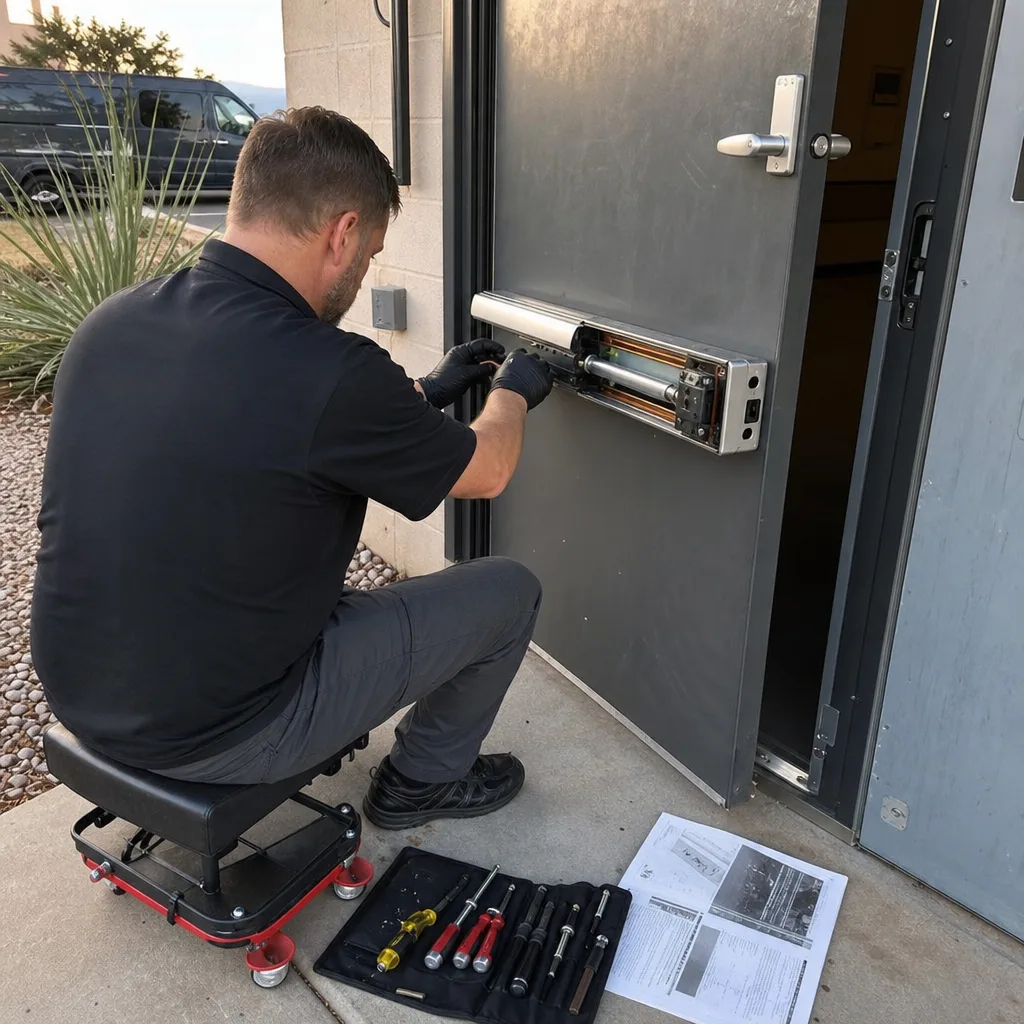
Property owners in Phoenix routinely conflate three separate credentials. Each serves a different purpose, and a legitimate locksmith operation should be able to produce all three on request, or explain clearly why one does not apply.
City of Phoenix Business License
The city requires any business operating within Phoenix corporate limits to register and obtain a general business license, also called a transaction privilege tax (TPT) license. This is a tax and zoning credential, not a professional qualification. It confirms the business has a registered address and is current on municipal taxes. It says nothing about who will arrive at your door or whether that person has been trained to rekey a Schlage deadbolt without damaging the bolt face.
Arizona Registrar of Contractors (ROC) License
Locksmith work generally falls below the monetary threshold that triggers ROC licensing for residential jobs. However, certain commercial installations - particularly those involving fire-rated door assemblies, panic hardware, or integrated access control tied to building life-safety systems - may require a licensed contractor if the total project value exceeds $1,000 or if the work affects a building’s certificate of occupancy. In practice, most standalone locksmith jobs in Phoenix do not require ROC involvement. If a locksmith claims ROC licensure, ask for the license number and verify it at roc.az.gov. The ROC database shows the specific classification, which should match the work being performed.
DPS Individual Locksmith License
This is the credential that matters for the person doing the work. The license number format is a letter followed by digits, and the pocket card includes the licensee’s photograph. We have advised customers in Arcadia, Sunnyslope, and the Biltmore corridor to request this number before confirming a dispatch. A legitimate operation provides it without hesitation. A refusal, deflection, or promise to “have the technician show it on arrival” is a signal to cancel the call.
On any invoice from Novak Lock & Security Phoenix, you will find three elements: the DPS license number of the technician who performed the work, the written scope approved before work began, and the documented photo record of the completed installation. These are not marketing claims. They are procedural requirements under The Haven Standard, applied across all ten Haven brands.
Phoenix Permits and Inspections: When a Locksmith Job Needs City Approval
Standard residential lock changes, rekeys, and even most deadbolt installations in Phoenix do not require a building permit or inspection. The city of Phoenix Building Construction Code, based on the International Building Code with local amendments, exempts minor hardware replacement from permit requirements. This covers the vast majority of homeowner requests: replacing a worn Kwikset entry set, upgrading to a Medeco high-security cylinder, or rekeying after a tenant turnover.
Permit triggers are specific and worth understanding before you contract for work that may be delayed by city review.
When Phoenix Requires a Permit for Locksmith-Related Work
- Installation of electronic access control systems that interface with fire alarm or life-safety systems - this requires electrical permit and fire department plan review
- Modification of fire-rated door assemblies, including cutting or altering the door slab or frame to accommodate new hardware, which voids the fire rating unless performed under an approved field labeling procedure
- Installation of automatic door operators (powered openers) on commercial entrances, which falls under accessibility and electrical codes
- Any work that changes the egress path or door swing in a commercial occupancy, which triggers building department review for code compliance
- Master key systems in certain multi-family and institutional occupancies where the city requires keyed-alike documentation for fire service access
The Phoenix Fire Department maintains specific requirements for key boxes (Knox boxes) on commercial properties. While the locksmith installs the box, the location and keying schedule require fire marshal approval. We have installed Knox boxes in downtown Phoenix high-rises and central corridor medical offices where the fire marshal’s sign-off was the final step before occupancy.
For access control systems in Phoenix, the permitting landscape is more complex. A standalone keypad on a single non-fire-rated door typically requires no permit. A networked system with electric strikes, mag locks, and integration to the building’s fire alarm panel requires electrical and fire permits, plan review, and inspection. The locksmith or security contractor should identify this requirement during the initial site survey and include permit costs in the written scope. At Novak Lock & Security Phoenix, we flag permit requirements during the first phone consultation and handle submittal as part of the project, with no markup on city fees.
Climate factors in Phoenix also affect hardware selection and, indirectly, code compliance. The extreme heat and intense UV exposure degrade standard exterior lock finishes within two to three years. We specify Grade 1 commercial hardware with proprietary finishes for south- and west-facing doors in Phoenix, particularly in neighborhoods like Ahwatukee and Laveen where direct sun exposure is prolonged. Using residential-grade hardware in these conditions leads to premature failure, and repeated service calls can trigger warranty disputes that hinge on whether the original specification matched the environmental load.
How to Verify a Locksmith License in Arizona (Step by Step
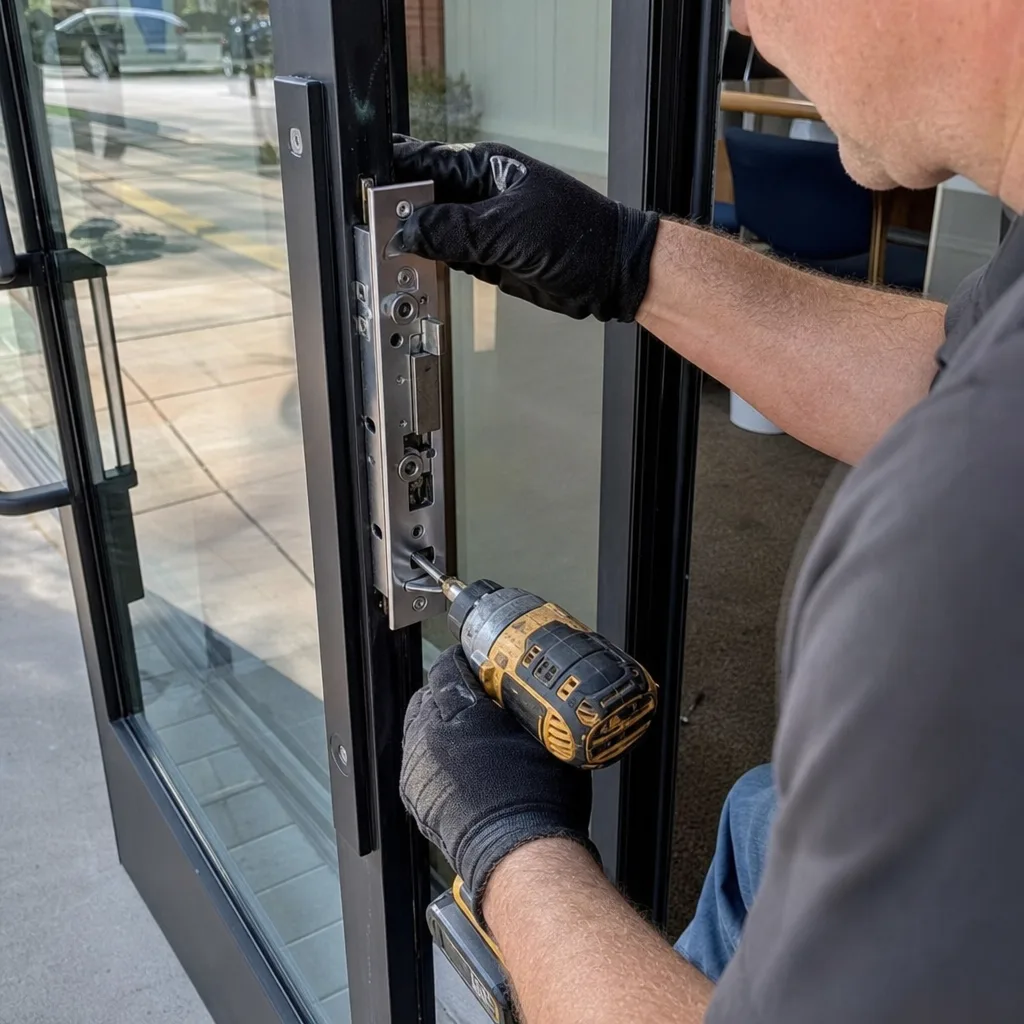
The DPS public registry is functional but not intuitive. Follow these steps to confirm that the person arriving at your Phoenix property is licensed.
- Obtain the full name and license number. Ask the dispatcher: “What is the DPS license number of the technician who will perform the work?” Write it down. If the dispatcher claims all technicians are licensed but cannot provide a specific number, this is a red flag.
- Visit the DPS public portal. Navigate to the Arizona Department of Public Safety website and locate the “Verify a License” tool under the Private Investigators and Security Guards section. The direct path is often buried; search “DPS locksmith license verification” if the site structure has changed.
- Enter the license number. The search returns the licensee’s name, license status (active, expired, suspended), expiration date, and any disciplinary actions on record. Cross-reference the name with the technician who arrives. If the names do not match, the person at your door is not the licensed individual.
- Check the expiration date. Licenses renew biennially. An expired license is legally equivalent to no license.
- Review disciplinary history. The registry notes formal actions, including license suspension or revocation. A pattern of complaints suggests operational problems that licensing alone does not prevent.
- Request pocket card verification on arrival. Arizona law requires licensed locksmiths to carry their DPS pocket card while working. The card includes a photograph. Ask to see it. A legitimate technician presents it without objection.
We have walked customers through this process by phone. It takes under three minutes and eliminates the majority of fraudulent operators. The ones who disappear when asked for a license number were never going to provide a written price or documented photo record anyway.
What Happens When an Unlicensed Locksmith Damages Your Property
The legal and practical consequences of hiring an unlicensed locksmith in Phoenix fall heavily on the property owner, with limited avenues for recovery.
Insurance Implications
Standard homeowner’s insurance policies in Arizona cover accidental damage caused by contractors, but most contain exclusions for work performed by unlicensed individuals. If an unlicensed locksmith drills out a high-security deadbolt, destroys the door slab, and abandons the job, your insurer may deny the claim on the basis that you failed to exercise reasonable care in vendor selection. The policy language typically refers to “qualified” or “licensed” service providers. We have reviewed claim denials in the Phoenix market where the adjuster cited the absence of a DPS license as the basis for refusal.
Commercial general liability policies for rental properties and businesses often contain similar exclusions. A property manager who hires an unlicensed rekey service for a 200-unit apartment complex in Tempe or Scottsdale assumes significant exposure if a tenant suffers loss due to faulty installation.
Recourse Options
Arizona does not operate a locksmith recovery fund or bonding requirement for the trade. If an unlicensed operator damages your property and disappears, your options are:
- Small claims court, which requires you to identify and serve the defendant - difficult when the business used a disposable phone and untraceable payment app
- Chargeback through your credit card company, which may succeed if the transaction was recent and the merchant is identifiable
- Complaint to DPS, which can investigate unlicensed activity but does not provide restitution to individual victims
- Complaint to the Arizona Attorney General’s Consumer Protection unit for patterns of fraud, not isolated incidents
The practical reality is that most victims absorb the loss. A drilled lock costs $150 to $400 to repair. A damaged fire door can run into the thousands. The prevention - verifying the license before dispatch - costs nothing.
At Residential Locksmith in Phoenix, we carry general liability and workers’ compensation insurance, and we are happy to provide certificates on request. More importantly, our written price and documented photo record create a paper trail that protects both parties if a dispute arises. Haven Standard Clause 1 exists precisely because the alternative - verbal estimates, cash payments, no documentation - leaves the customer exposed.
The Pre-Dispatch Checklist: Questions to Ask Before Anyone Touches Your Locks
Use this language verbatim when calling any locksmith in the Phoenix area. The responses will tell you whether you are dealing with a licensed operation or a dispatch shell.
- “What is the DPS license number of the technician who will perform my job?” - Accept only a specific number, not assurances that “all our techs are licensed.”
- “Will you provide that number in writing before you dispatch?” - Email or text confirmation creates a record.
- “What is the total price, including all fees, before the technician leaves?” - Bait-and-switch operations quote a low service fee and add “labor,” “trip charge,” or “emergency rate” on arrival. The total should be a single figure.
- “Is the price you quote the price on the invoice, with no additions?” - This is Haven Standard Clause 1. Any hesitation or qualification is a signal to hang up.
- “What documentation will I receive when the job is complete?” - Expect a written invoice, scope of work, and ideally a photo record. Vague answers suggest no documentation protocol.
- “Are you insured, and will you provide a certificate?” - General liability is standard for legitimate operations. Refusal is not.
- “What is your company’s physical address in Phoenix?” - Many dispatch operations use virtual offices or out-of-state call centers. A verifiable local address indicates actual presence.
We answer these questions without irritation because we expect them. A customer in the Biltmore area asked all seven last Tuesday before scheduling a full-property rekey. The call took four minutes. She received a written quote by email, the technician arrived with DPS card visible, and the invoice matched the quote to the dollar. This is normal for a legitimate operation. It is impossible for a fraudulent one.
High-Security Locks and Commercial Access Control: Additional Compliance Layers
Standard residential lock work operates in a relatively unregulated space. High-security installations and commercial access control introduce additional compliance considerations that Phoenix property owners should understand; see our Commercial Locksmith Maintenance Checklist for Phoenix Homeowners for a structured overview.
High-Security Cylinder Installation
Brands like Medeco, Mul-T-Lock, and Abloy use patented keyways and restricted key duplication. The manufacturer authorizes specific dealers to purchase and install these products. Authorization is not a government license, but it is a credential worth verifying. An unauthorized installer may source cylinders through gray-market channels, voiding the manufacturer’s warranty and potentially compromising the key control system. We are factory-authorized for Medeco, Mul-T-Lock, and Abloy, and we provide authorization documentation with every high-security installation.
The physical installation of a high-security cylinder in a standard residential door does not require a permit in Phoenix. However, retrofitting a high-security mortise lock into a fire-rated commercial door does require attention to the door’s labeling. Removing or altering the label voids the fire rating. Proper procedure involves field labeling by an approved agency after installation, or replacing the door with a pre-labeled assembly that accommodates the new hardware.
Commercial Access Control and Code Compliance
Commercial Locksmith in Phoenix work increasingly involves electronic access control. The compliance layers include:
- National Electrical Code (NEC) Article 725 for low-voltage wiring
- NFPA 72 for fire alarm integration, including automatic unlock upon fire alarm activation
- ADA Standards for Accessible Design, which govern door hardware operation force, mounting height, and clear opening width
- Phoenix Fire Department requirements for Knox boxes and fire department key switches
- IBC Chapter 10 egress requirements, which prohibit certain mag lock configurations without redundant release mechanisms
A common error in Phoenix commercial installations is the use of magnetic locks without proper release integration. Mag locks hold the door secure until power is interrupted, but fire code requires automatic release upon fire alarm, sprinkler activation, or power failure with battery backup. We have surveyed downtown Phoenix office buildings where unlicensed installers omitted the fire alarm tie-in, creating a life-safety violation that the fire marshal flagged during routine inspection. The correction required full rewiring, new power supplies, and in one case, replacement of the mag locks with electric strikes that fail-safe rather than fail-secure.
For access control systems in Phoenix, we provide a written scope that identifies all code requirements applicable to the specific occupancy, notes any permit requirements, and specifies the hardware grades and brands to be installed. The customer approves in writing before work begins. This documentation serves as the basis for warranty coverage and, if needed, code compliance verification by the building department or fire marshal.
Common Mistakes to Avoid
- Assuming a Google Maps listing equals legitimacy. Fake locksmith listings proliferate in Phoenix search results. Verify the DPS license independently; do not trust reviews or a professional-looking website.
- Accepting a verbal estimate for emergency lockout service. The bait-and-switch model depends on customers who are stressed and locked out. Insist on a total price before dispatch, or call a different company.
- Confusing a business license with a locksmith license. A city of Phoenix business license proves tax registration, not professional qualification. The DPS individual license is the credential that matters.
- Hiring based on the lowest quoted service fee. A $19 service fee invariably becomes a $200+ invoice. Honest pricing in the Phoenix market runs higher upfront and matches the invoice. Lock rekey typically runs $18-$35 per cylinder, quoted in writing before we start, with no call-out surcharge added on arrival.
- Neglecting to ask about permits on commercial access jobs. Unpermitted work can void insurance coverage and trigger code enforcement. A legitimate contractor identifies permit requirements proactively.
- Failing to document the work received. Without a written invoice and scope, warranty claims and insurance disputes become difficult. Insist on documentation as standard, not an upgrade.
- Using unlicensed locksmiths for property management turnover. The liability exposure multiplies with unit count. A single faulty rekey in a 100-unit complex creates potential loss for every tenant.
When to Call a Professional
Call a licensed locksmith when you are locked out, need locks changed or rekeyed, are upgrading security after a break-in, managing rental property turnover, or installing any electronic access system. Call before you drill a lock yourself - most residential lockouts resolve without cylinder destruction when handled by a trained technician with proper picks and bypass tools. Call when you need a master key system designed, when your hardware is failing prematurely in Phoenix heat, or when you are unsure whether your commercial door hardware meets current fire and egress codes.
Novak Lock & Security Phoenix offers free estimates in Phoenix - call (480) 376-7170. We answer live, 24 hours a day. The dispatcher will quote a firm price for your specific job, and the technician who arrives will carry a current DPS license, a uniform, and a documented photo record of every step. The price on the phone is the price on the invoice. It has been that way since 2002.
Frequently Asked Questions
Request the technician’s DPS license number, then verify it through the Arizona Department of Public Safety online license lookup tool under Private Investigators and Security Guards. Active status, current expiration date, and matching name confirm validity. Call (480) 376-7170 if you need guidance navigating the DPS portal.
No, standard locksmith work does not require an Arizona Registrar of Contractors license. Only projects exceeding $1,000 or affecting structural, electrical, or fire-rated assemblies may trigger ROC requirements. The DPS individual locksmith license is the credential required for routine lock work.
No, standard residential lock replacement, rekeying, and deadbolt installation do not require a city of Phoenix building permit. Commercial electronic access control tied to fire systems, fire-rated door modifications, and automatic door operators do require permits and inspection.
Document the damage with photographs, request a copy of the technician’s DPS license and insurance certificate, and file a claim with the company’s general liability insurer. If the technician was unlicensed, your homeowner’s insurance may deny the claim; consult your policy and consider small claims court if the operator is identifiable. Prevention through pre-dispatch license verification is the most effective protection.
Residential lockout service typically runs $85-$150 during standard hours, with rekeying at $18-$35 per cylinder and deadbolt installation at $120-$250 including hardware, depending on grade and brand. Commercial access control and high-security installations are surveyed and priced per project. Novak Lock & Security Phoenix quotes every job in writing before dispatch, with no call-out surcharge added on arrival.
Yes, Arizona’s licensing requirement applies only to services performed for compensation. Property owners may work on their own locks. However, drilling a lock without understanding the mechanism often destroys hardware that a trained technician could open intact. We provide free second opinions on any written estimate, including DIY repair assessments.
The Bottom Line
Arizona’s DPS locksmith license is a meaningful credential that too few property owners verify. The license confirms identity, background clearance, and baseline training for the individual who will work on your locks. It does not guarantee quality or ethical pricing, which is why we supplement licensing with written quotes, documented photo records, and Haven Standard Clause 1. In the Phoenix market, where unlicensed dispatch operations are common, the three-minute license check is the most effective security step you can take before letting anyone touch your hardware. For more on protecting your property, explore our more guides & resources. Know the difference between a business license, a contractor’s license, and a locksmith license. Ask the specific questions. Expect specific answers. The legitimate ones will provide them without hesitation.
Written by Daniel Novak, Owner at Novak Lock & Security Phoenix, serving Phoenix since 2002.