
Last updated September 25, 2026
Non-destructive entry first, always - and we re-key Schlage, Kwikset, and Baldwin locks on the spot while you watch
You get a price before we start. It does not change when we arrive. No surprises.
Locksmith Warning Signs: A Phoenix Homeowner’s Reference Guide
Phoenix ranks in the top ten U.S. metros for locksmith scam complaints filed with the BBB. Not because residents here are careless, but because our city’s sprawl, high rental turnover, and transient population make it structurally attractive to call-center bait-and-switch operations. These scams aren’t subtle. The FTC has documented their patterns for years. Yet they work because they exploit a specific moment: you’re locked out, it’s 107 degrees, and you need someone now. This guide makes each warning sign concrete, shows you the exact language scammers use, and tells you what to collect before any technician touches your lock. For additional protection, see our Complete Guide to Locksmith in Phoenix.
Quick Answer
The five warning signs of a fraudulent locksmith in Phoenix are: a quote that sounds too low and refuses to be put in writing; a technician who arrives in an unmarked vehicle with no uniform or company ID; immediate insistence that drilling is the only option; price inflation at the door using scripted excuses; and a generic or fabricated invoice lacking itemized parts, labor rates, and a verifiable business address. A legitimate Phoenix locksmith will quote a firm price before dispatch, arrive in a marked van, and open most residential locks without drilling.
Table of Contents
- Why Phoenix Is a High-Target Market for Locksmith Scams
- The Too-Low Quote That Won’t Be Written Down
- The “Drilling Is the Only Option” Script
- Price Inflation at the Door: Exact Language and Counter-Responses
- Unmarked Vehicles, No Uniform, No ID
- The Fake Invoice: What to Demand Before Paying
- How to Report a Fraudulent Locksmith in Phoenix
- How to Vet a Locksmith Before You Call
Why Phoenix Is a High-Target Market for Locksmith Scams
The scam locksmith business model depends on three conditions: a large population of renters who move frequently, a spread-out metro where customers can’t easily visit a physical shop, and enough heat and urgency that a locked-out person will accept whatever arrives. Phoenix offers all three.
Maricopa County sees some of the highest rental turnover in the country. When a lease ends in Arcadia, Biltmore, or the Melrose District, new tenants often need locks rekeyed or changed on short notice. They search “locksmith near me,” click the first result with a local phone number, and don’t realize that number routes to a call center in another state. The dispatcher quotes $19 or $29 for a “service call,” knowing the technician will demand $300-$800 at the door.
The sprawl matters too. A homeowner in Ahwatukee or Desert Ridge has fewer neighbors watching the street than someone in a dense eastern city. An unmarked sedan with magnetic signs slapped on the doors doesn’t stand out in a parking culture built around garages and driveways. The technician knows no one is looking.
Finally, there’s the climate. In July, when it’s 118 degrees and your child or pet is inside, you’ll pay. Scammers know this. They don’t need to be convincing. They need to be first in the search results.
The Arizona Department of Public Safety (DPS) does not require locksmiths to hold a state-issued occupational license. There is no state locksmith board, no mandatory bonding, no continuing education. This regulatory gap makes Phoenix especially vulnerable. A fraudulent operator can buy a phone number, run ads, and start dispatching tomorrow. In states with licensing, the barrier is at least slightly higher.
What this means for you: the burden of verification falls entirely on the customer. No state agency has pre-vetted the person at your door.
The Too-Low Quote That Won’t Be Written Down
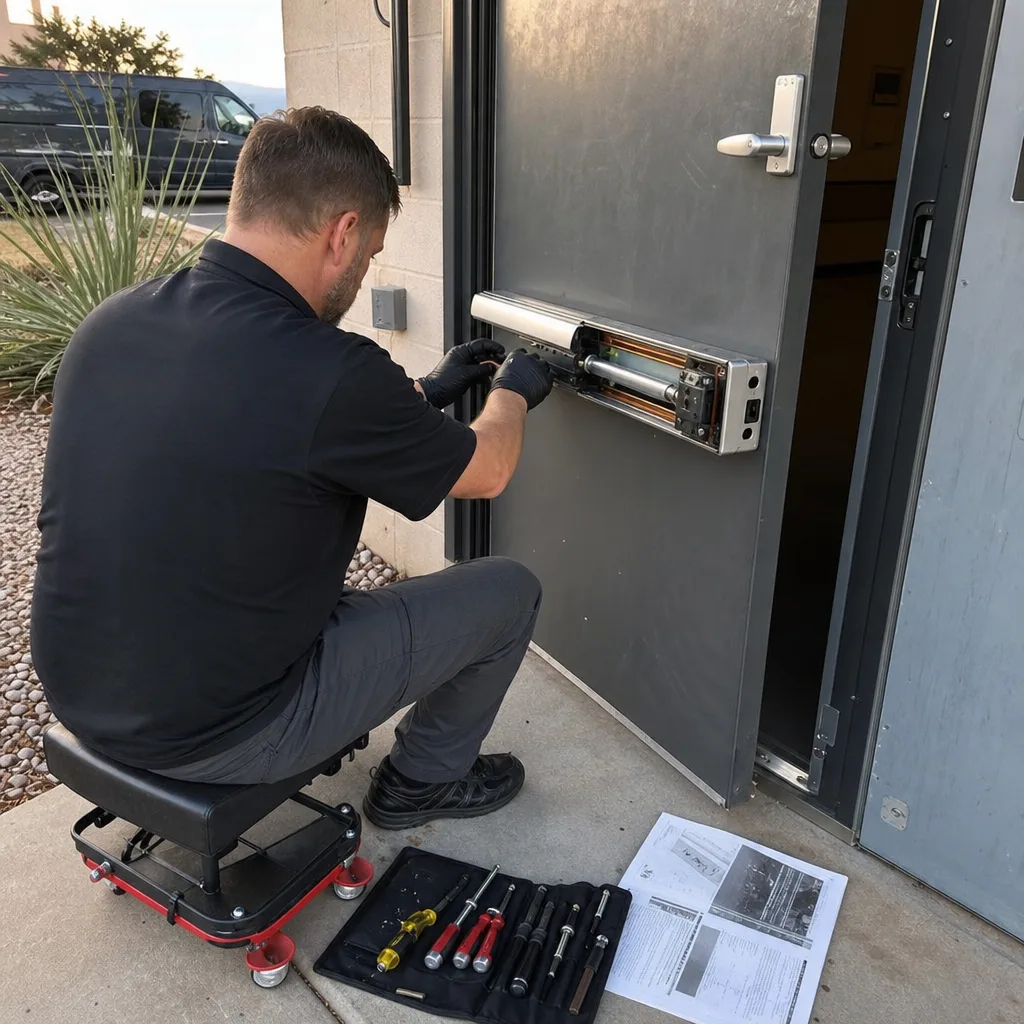
The opening move is almost always the same. A dispatcher quotes $15, $19, or $29 for a “service call” or “technician visit.” They will not put this in writing. They will not state what the total job will cost. They will not explain that the quoted figure covers only the act of showing up, not the actual work.
This is the bait. The switch comes later.
At Novak Lock & Security Phoenix, we operate under Haven Standard Clause 1: the price on the phone is the price on the invoice. This means the dispatcher quotes a firm, complete price for the specific work you describe, and the technician is contractually prohibited from changing it at your door. We’ve had this rule since 2002. It exists because the alternative - the bait-and-switch - is the standard practice in this trade.
Here’s what a legitimate quote sounds like: “Rekeying three Schlage deadbolts in your Paradise Valley home will be $X per cylinder, for a total of $Y, plus tax. I’ll email you that in writing now. The technician will have that same document when he arrives.” Here’s what a scam quote sounds like: “It’s just $19 for us to come out, and then the technician will assess and give you the price.”
The second version is not a quote. It’s a blank check.
Specific red flags in the initial call:
- The dispatcher refuses to state a total price for the described work
- The dispatcher claims pricing “depends on the lock” but won’t name common brands (Kwikset, Schlage, Baldwin) or give ranges for each
- The company has no physical address in Maricopa County, or the address turns out to be a mailbox or virtual office
- The dispatcher pressures you to commit quickly: “I only have one technician in your area right now”
Our recommendation: if the price isn’t in writing before the van leaves for your location, hang up and call someone else. The 30 seconds of inconvenience is trivial compared to the $400-$1,200 overcharge that typically follows.
The “Drilling Is the Only Option” Script
This is where technical knowledge becomes your protection. The vast majority of residential locks in Phoenix - standard Kwikset, Schlage, Weiser, and even many Baldwin sets - can be opened without drilling by a competent locksmith with proper tools. Drilling destroys the lock. It is faster for an unskilled technician. It is also the excuse for massive price inflation: “This is a high-security lock, I had to drill it, now you need a replacement, and that’s $400 plus labor.”
When is drilling actually necessary? Rarely. A lock with a broken key sheared off inside, a high-security cylinder with anti-pick pins that has malfunctioned internally, or a commercial-grade lock with a damaged mechanism may require drilling. These situations are exceptions. They are not the default.
In our experience across Phoenix, from the historic homes in Willo to the newer builds in Verrado, we drill open fewer than 3% of residential locks we encounter. The other 97% yield to standard picking, bypass tools, or key extraction techniques that take 5-20 minutes and leave the lock fully functional.
The scam script works like this:
- The technician arrives and immediately examines the lock for 10 seconds
- He announces, “This is a high-security lock” (it almost never is - true high-security cylinders like Medeco, Mul-T-Lock, or Abloy are visibly distinct and relatively uncommon in standard Phoenix residential installs)
- He states that “special tools” or “drilling” are required
- The price jumps from the quoted $19 to $300-$600
- If you object, he mentions the “service call” was separate, or that your lock “isn’t standard”
Your counter-response: “Stop. Do not drill. I want to see your written quote for this specific work, and I want to verify what brand and model this lock is.” A legitimate technician can identify a lock by sight. A scammer often cannot, or will misidentify a basic Schlage as “high-security” to justify drilling.
If drilling is truly necessary, a competent locksmith explains why, shows you the specific damage or security feature preventing non-destructive entry, and quotes the replacement lock and installation in writing before starting. At Novak Lock & Security Phoenix, we document the condition of the existing lock with photos before any drilling occurs, and the customer receives that photo record as part of every visit.
Price Inflation at the Door: Exact Language and Counter-Responses
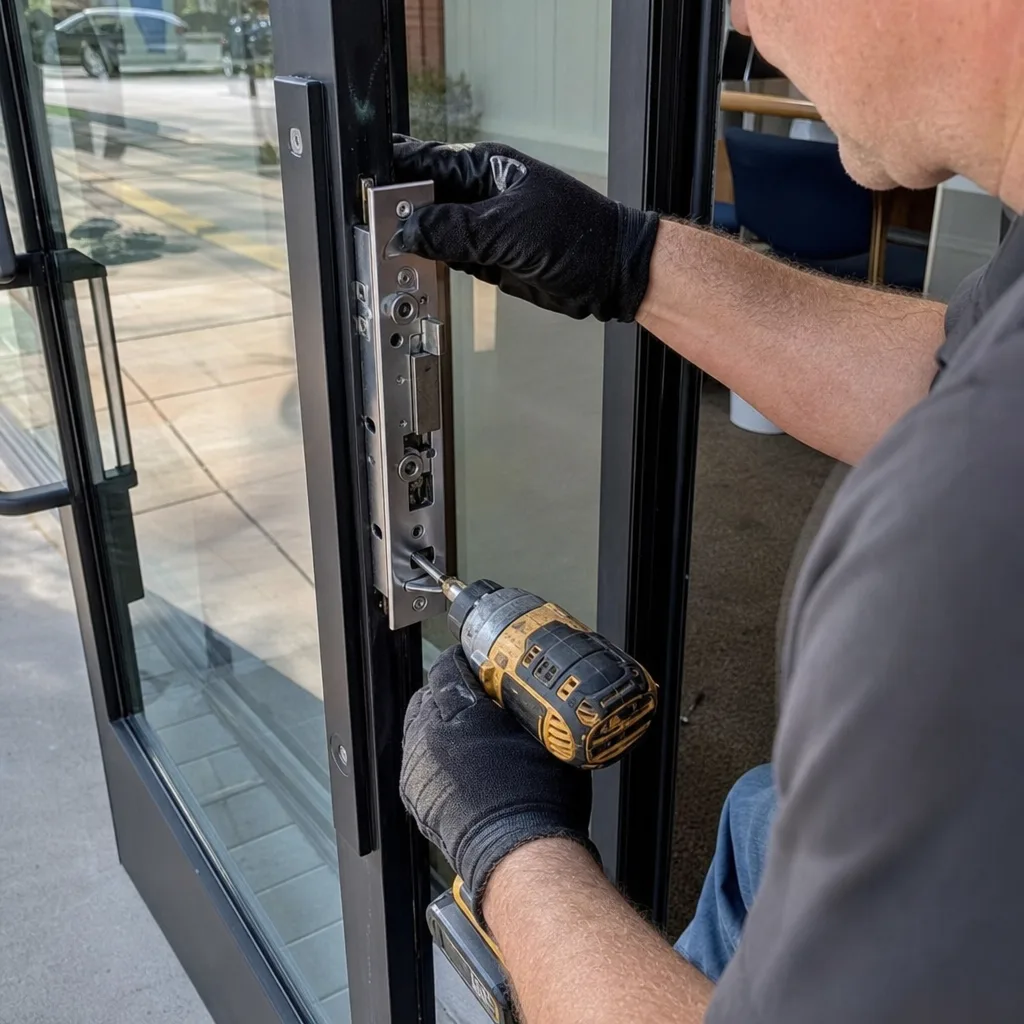
The price inflation moment is scripted and rehearsed. Understanding the exact language helps you recognize it in real time.
Common phrases and what they actually mean:
- “The phone price was just for the service call.” This means the dispatcher deliberately quoted a meaningless number. The technician’s real rate - often $150-$300 per hour with a 2-hour minimum - is now revealed.
- “This lock requires a special tool.” Standard locksmith tools open standard locks. “Special tool” is vague by design. Ask: “What is the tool called, and why is it necessary for this specific lock?”
- “It’s after hours / weekend / holiday, so the rate is different.” Legitimate companies state after-hours rates upfront. They do not spring them at the door.
- “The lock is damaged inside, I can’t see it until I take it apart.” If the lock was functional when you were locked out, internal damage is unlikely. This is a pretext for unnecessary replacement.
- “I can give you a discount if you pay cash.” This serves two purposes: it avoids a paper trail, and it may precede a demand for even more cash than originally stated.
Your exact counter-response: “I was quoted [specific amount] for [specific work]. I have that in writing. I will pay that amount, or you will leave without payment. I am documenting this interaction.”
Then document. Use your phone to record or photograph the technician, the vehicle, and any paperwork. Arizona is a one-party consent state for recording, meaning you may record a conversation you are participating in without informing the other party.
Do not let the technician pressure you by claiming you “have to” pay because he “already came out.” A service call you did not authorize at an inflated rate is not a binding contract. If the technician becomes threatening or refuses to leave, call the Phoenix Police non-emergency line: (480) 376-7170.
At Novak Lock & Security Phoenix, our dispatchers quote complete prices. The technician carries that same written quote. Haven Standard Clause 1 prohibits any change at the door. We’ve handled over 60,000 locks, keys, and systems since 2002 under this rule.
Unmarked Vehicles, No Uniform, No ID
A legitimate locksmith operation invests in marked vehicles for a simple reason: they want to be found, recognized, and trusted. An unmarked vehicle is not a minor quirk. It is a meaningful signal.
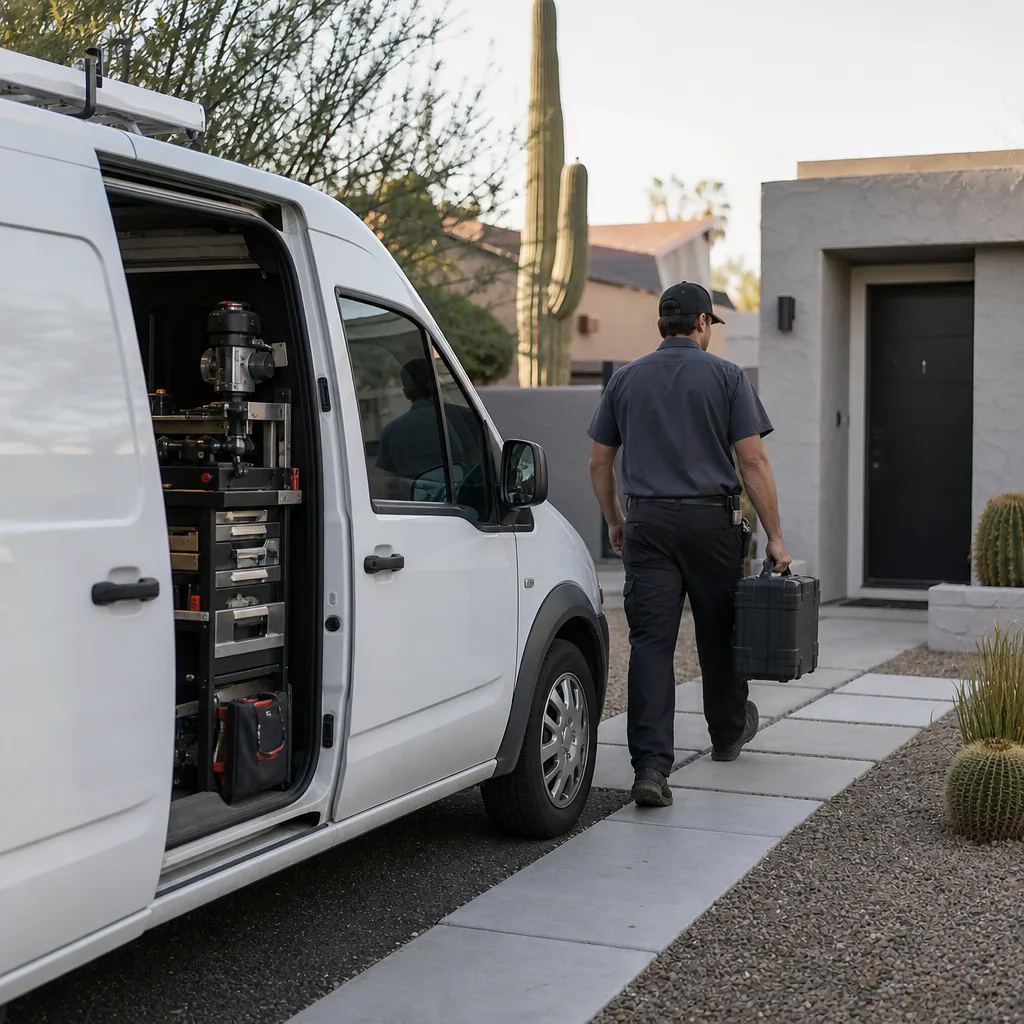
What you should see: a van or truck with permanent lettering showing the company name, phone number, and often license information. The technician should arrive in a uniform with the same company name, and should offer identification without being asked. At Novak Lock & Security Phoenix, our technicians are background-checked, uniformed, and carry company ID. Every visit includes a documented photo record, which we leave with the customer at job completion.
What scam operations use: personal vehicles with magnetic signs that can be removed in seconds, or completely unmarked cars. The “technician” may wear plain clothes or a generic work shirt. He will not offer ID, and if asked, may show a driver’s license from another state or nothing at all.
Why this matters beyond the immediate transaction: if something goes wrong - damage to your door, an overcharge, a key that doesn’t work - you need to identify who was in your home. An unmarked vehicle and no verifiable ID makes this nearly impossible. The “company” you called may be a shell with no physical location, no registered business entity in Arizona, and no insurance.
Before any work begins, ask to see:
- A company photo ID with the same name as the business you called
- The written quote you were promised
- Proof of insurance (general liability, at minimum)
A legitimate technician produces these without complaint. A scammer becomes evasive, hostile, or claims “the office has that.” The office, in these cases, often does not exist.
The Fake Invoice: What to Demand Before Paying
The invoice is your only documentation if a dispute arises. A fraudulent or generic receipt is useless in small claims court, with your credit card company, or when filing a complaint with the Arizona Attorney General. Knowing the difference protects you.
A legitimate locksmith invoice in Phoenix must contain:
- The company’s full legal business name and a verifiable Arizona address (not a P.O. box)
- Arizona transaction privilege tax (TPT) number, if the company is registered to collect sales tax
- Itemized labor (hours or flat rate, rate per hour or per unit)
- Itemized parts (brand, model, quantity, unit price)
- Date and time of service
- Technician’s name or ID number
- Clear statement of warranty terms
- Total amount, with tax shown separately
A fake or fabricated invoice typically shows: a generic description like “lock service - $450,” no business address or only a phone number, no tax number, no technician name, no warranty terms, and often a demand for cash or payment to a personal payment app (Venmo, Cash App, Zelle) rather than a business check or card processor.
At Novak Lock & Security Phoenix, every invoice is itemized, includes our Arizona business registration details, and references the same written quote provided before dispatch. Our 365-Day Done Right Promise is printed on every invoice: if it’s not done right, we make it right.
If you receive a suspicious invoice, do not pay in cash. Use a credit card, which offers dispute rights under the Fair Credit Billing Act. Photograph the invoice, the technician, and the vehicle before the technician leaves. These records are essential if you later file with the Arizona Attorney General’s Consumer Protection Division, the BBB, or your credit card issuer.
How to Report a Fraudulent Locksmith in Phoenix
If you believe you’ve encountered a fraudulent locksmith, documentation is your leverage. Collect it before the technician leaves, while the evidence is in front of you.
What to collect immediately:
- Photograph the technician, the vehicle (including license plate), and any signage
- Photograph the invoice or receipt, front and back
- Record or write down the exact price quoted on the phone and the price demanded at the door
- Note the technician’s stated name and any ID he showed
- Save any text messages, emails, or call records from the initial contact
Where to report in Arizona:
- Arizona Attorney General Consumer Protection Division: File online at azag.gov/consumer or call (480) 376-7170. The AG’s office tracks patterns and can pursue enforcement against repeat offenders.
- Better Business Bureau Serving Central & Northern Arizona: bbb.org - complaints here become part of the public record and affect BBB ratings.
- Arizona Department of Public Safety: While DPS does not license locksmiths, they maintain records of criminal complaints and can investigate fraud.
- Your credit card issuer: If you paid by card, dispute the charge as “services not as described” or “fraudulent merchant.”
- Phoenix Police: For threats, refusal to leave, or theft, call the non-emergency line at (480) 376-7170 or 911 if you feel unsafe.
Realistic expectations: individual recovery is difficult. Scam operations often dissolve and re-form under new names. Your complaint matters most as part of a pattern that regulators or law enforcement can eventually act upon. The documentation you collect may also help the next victim who searches the company name.
How to Vet a Locksmith Before You Call
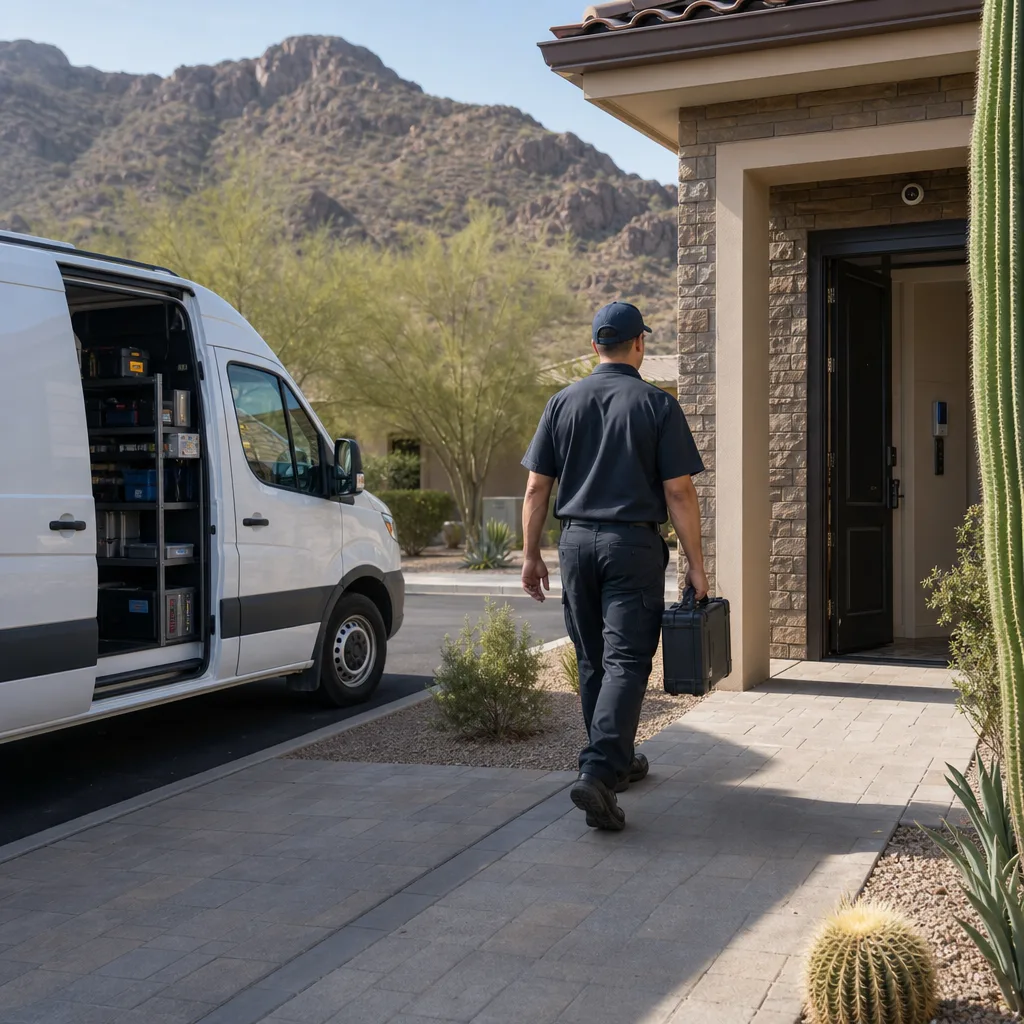
The best defense is verification before dispatch. In an emergency, this feels impossible. It takes approximately 90 seconds and can save you hundreds of dollars.
Steps to take:
- Verify a physical address. Search the company’s stated address on Google Maps. Is it a commercial location, a residence, or a mailbox store? A legitimate Phoenix locksmith has a shop or warehouse you can visit.
- Check the BBB listing. Look for accreditation, complaint history, and how complaints were resolved. A pattern of unresolved complaints is definitive.
- Read the three-star reviews. These are often the most detailed and least filtered. Look for mentions of price changes at the door, drilling without explanation, or refusal to provide written quotes.
- Call and ask for a written quote. If the dispatcher deflects, hang up. This single test eliminates most scam operations.
- Ask about the technician. Will they be in a marked van? In uniform? Background-checked? A legitimate company answers yes to all three without hesitation.
For Phoenix homeowners in neighborhoods from Encanto to North Central, from the historic districts to the newer developments in Gilbert and Chandler, the same standards apply. The sprawl that makes scam operations profitable also means your vigilance is your protection.
Novak Lock & Security Phoenix home operates under The Haven Standard, the documented quality framework shared across all ten Haven brands. Every call is answered by a live person, 24/7. Every quote is written before any work starts. Every visit includes a background-checked, uniformed technician and a documented photo record.
Common Mistakes to Avoid
- Searching only “locksmith near me” and clicking the top ad. The top ad is often the highest bidder, not the most legitimate. Scroll past ads to organic results, or search “[company name] Phoenix BBB” specifically.
- Accepting a verbal quote as sufficient. A verbal quote is legally unenforceable and functionally meaningless. Demand email or text confirmation with the full scope and total price.
- Allowing drilling without demanding explanation. Ask what specific feature of your specific lock prevents non-destructive entry. A competent technician names the part and shows you.
- Paying cash to “get a discount.” Cash eliminates your paper trail and dispute rights. Credit cards provide recourse; use them.
- Not photographing the technician and vehicle. In the stress of the moment, documentation feels unnecessary. It is essential if you need to report or dispute later.
- Assuming Arizona regulates locksmiths. It does not. There is no state license to verify, no board to complain to. Your due diligence is the only screening that exists.
When to Call a Professional
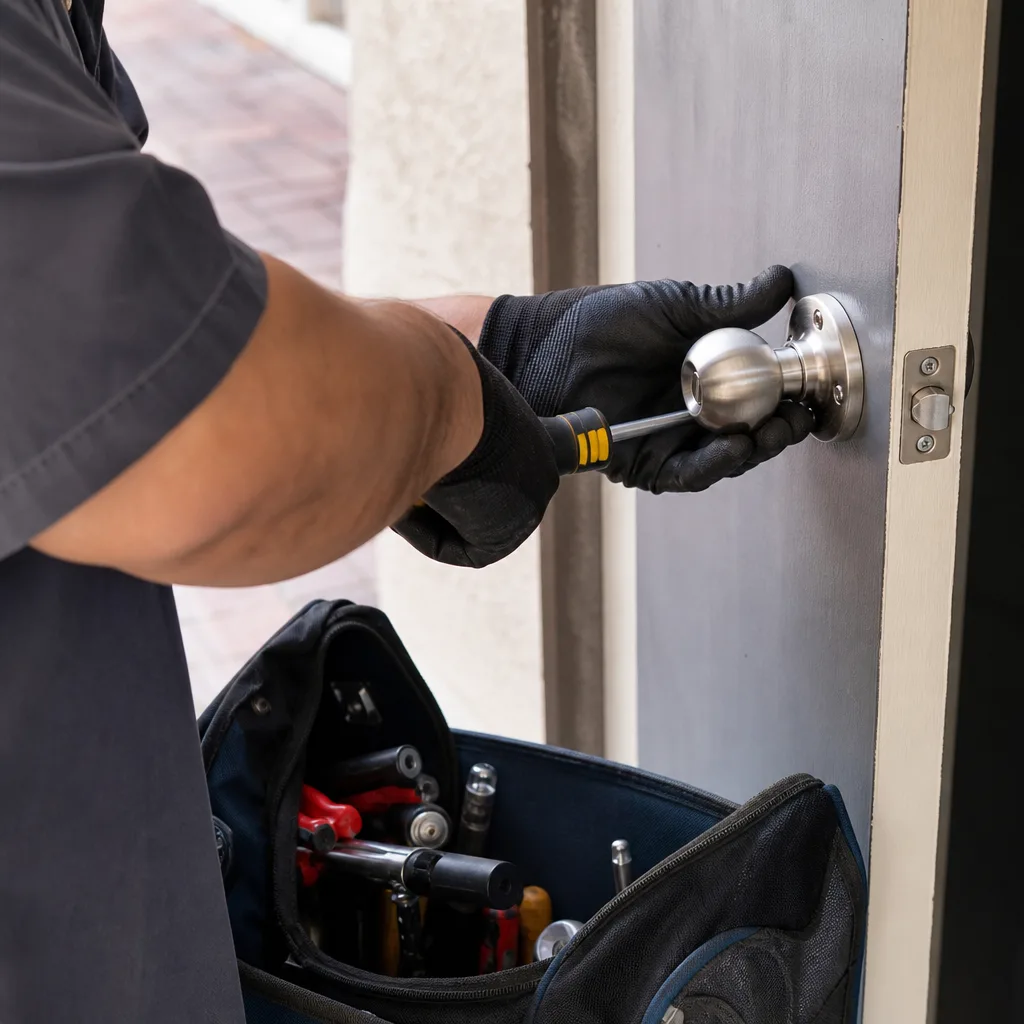
Call a professional locksmith when you’re locked out, when you’ve lost keys and need rekeying, when moving into a new home, when a lock is malfunctioning, or when you want to upgrade security. In Phoenix’s climate, heat and dust accelerate wear on exterior hardware; a sticky deadbolt in July often signals internal degradation that will fail completely. Business owners should also consult our Commercial Locksmith Maintenance Checklist for Phoenix Homeowners.
Residential Locksmith in Phoenix services from Novak Lock & Security Phoenix include lock installation, rekeying, and emergency response. We also provide Commercial Locksmith in Phoenix services and Access Control Systems in Phoenix for properties requiring electronic entry management. Every job begins with a written quote, and estimates are free. Call (480) 376-7170.
Frequently Asked Questions
Lock rekeying typically runs $19-$35 per cylinder, lockout service ranges $75-$150 during standard hours, and new lock installation varies $100-$300 per door depending on hardware grade. Novak Lock & Security Phoenix quotes firm prices in writing before dispatch, with no call-out surcharge added at arrival. Explore more guides & resources on our blog. Call (480) 376-7170 for an exact quote on your specific job.
At Novak Lock & Security Phoenix, yes. Haven Standard Clause 1 states the price on the phone is the price on the invoice, and technicians are contractually prohibited from changing it at the door. This rule has been in place since 2002. If you receive a quote from another locksmith, we offer a free second opinion on any written estimate.
Emergency response times in Phoenix typically range 20-45 minutes depending on your location, traffic conditions, and time of day. Scam operations often quote impossibly short times (10 minutes) to secure your call, then dispatch from far outside your area. Ask where the technician is departing from and get an ETA in writing.
Arizona does not require locksmiths to hold a state occupational license. This means you must verify the business directly: check for a physical address, BBB accreditation, insurance documentation, and a history of customer reviews. Ask for proof of general liability insurance before any work begins.
Only after the technician explains exactly why drilling is necessary for your specific lock, shows you the feature or damage preventing non-destructive entry, and quotes the replacement cost in writing. For standard residential locks in Phoenix, drilling is rarely necessary. If a technician insists immediately, refuse and call another provider.
State that you will pay only the quoted amount, document the interaction with photos or recording, and if the technician becomes threatening or refuses to leave, call Phoenix Police at (480) 376-7170. Do not pay under duress. Pay by credit card if you must pay, then dispute the charge. Report the incident to the Arizona Attorney General and BBB with all documentation.
The Bottom Line
Locksmith scams in Phoenix follow a documented pattern: the too-low quote, the unmarked vehicle, the drilling demand, the price inflation, the fake invoice. Each step is recognizable once you know what to look for. The city’s lack of locksmith licensing puts the burden of verification entirely on you, but the verification itself is straightforward. Demand a written quote before dispatch. Confirm a marked vehicle and uniformed technician. Refuse unexplained drilling. Pay by credit card. Document everything. These habits protect you and, over time, make the scam model less profitable in our market.
Written by Daniel Novak, Owner at Novak Lock & Security Phoenix, serving Phoenix since 2002.