
Last updated September 25, 2026
Non-destructive entry first, always - and we re-key Schlage, Kwikset, and Baldwin locks on the spot while you watch
You get a price before we start. It does not change when we arrive. No surprises.

Commercial Locksmith Maintenance Checklist for Phoenix Homeowners
A commercial closer rated for a 10-year service life in a temperate climate typically shows hydraulic degradation in 5-6 years on a west-facing Phoenix entrance. Yet most property managers still follow the national manufacturer schedule. We’ve documented this mismatch across Phoenix since 2002, from downtown office buildings to strip centers in Arcadia and Biltmore. This guide gives you a maintenance checklist written for Phoenix conditions, not Cleveland, with intervals that match what the hardware actually experiences here. For The Complete Guide to Locksmith in Phoenix, see our expanded resource.
Quick Answer
A commercial locksmith maintenance visit in Phoenix should happen twice yearly: spring (before monsoon season) and fall (after UV peak). Each visit covers door closers, exit devices, keyway cylinders, master key systems, and access control power supplies. Expect $180-$420 per door for a full maintenance visit versus $340-$780 for an emergency reactive call when the same component fails.
Table of Contents
- How Phoenix Climate Destroys Commercial Hardware Faster
- Maintenance Visit vs. Reactive Call: The Cost Difference
- Door Closer and Exit Device Maintenance
- Exterior Keyway Cylinder Inspection and Replacement
- How to Structure a Master Key Audit
- Access Control and Monsoon Season Power Protection
- What Your Maintenance Record Must Include for Insurance
- Common Mistakes to Avoid
- When to Call a Professional
- Frequently Asked Questions
How Phoenix Climate Destroys Commercial Hardware Faster
Phoenix averages 299 days of sun annually and summer surface temperatures on dark metal doors regularly hit 165°F. Manufacturer service intervals assume moderate UV and thermal cycling. Here, that assumption costs money.
We’ve measured the difference. In 2023 we serviced a 12-door commercial building on Camelback Road where every exterior closer was installed in 2018, five years prior. Seven of twelve showed hydraulic fluid breakdown, seal hardening, or arm corrosion. The building manager had followed the manufacturer’s 10-year inspection guideline. In a Cleveland climate, those closers would have been fine. In Phoenix, they were two years past due.
The components that degrade fastest under Phoenix conditions:
- Door closers: Hydraulic fluid thins at sustained high temperatures. Seals dry and crack. Mounting screws back out from daily thermal expansion cycles. We recommend inspection every 2.5-3 years for south- and west-facing doors, versus the standard 5-year interval.
- Exterior keyway cylinders: UV degrades protective coatings on brass and nickel silver. Dust and sand (Phoenix’s PM10 levels exceed national standards) abrade internal pin chambers. We’ve extracted cylinders from Ahwatukee and Paradise Valley properties where the keyway was visibly worn oval after four years.
- Exit device push bars: Aluminum components oxidize. Spring mechanisms fatigue faster with thermal cycling. The touchpad surface chalks and cracks.
- Access control power supplies: Heat reduces capacitor life by roughly half for every 10°C above rated temperature. A supply rated for 50,000 hours at 77°F operates perhaps 25,000 hours in an unconditioned Phoenix electrical room.
- Electric strikes and mag locks: Coil insulation degrades. Mag lock faceplates delaminate. We’ve replaced strikes in downtown Phoenix that failed in three years where the same model lasts eight in Portland.
The checklist below adjusts manufacturer intervals for Phoenix reality. We’ve developed these intervals from 60,000+ locks, keys, and systems installed or serviced since 2002, every one with a written price before we started and a documented record when we left.
Maintenance Visit vs. Reactive Call: The Cost Difference
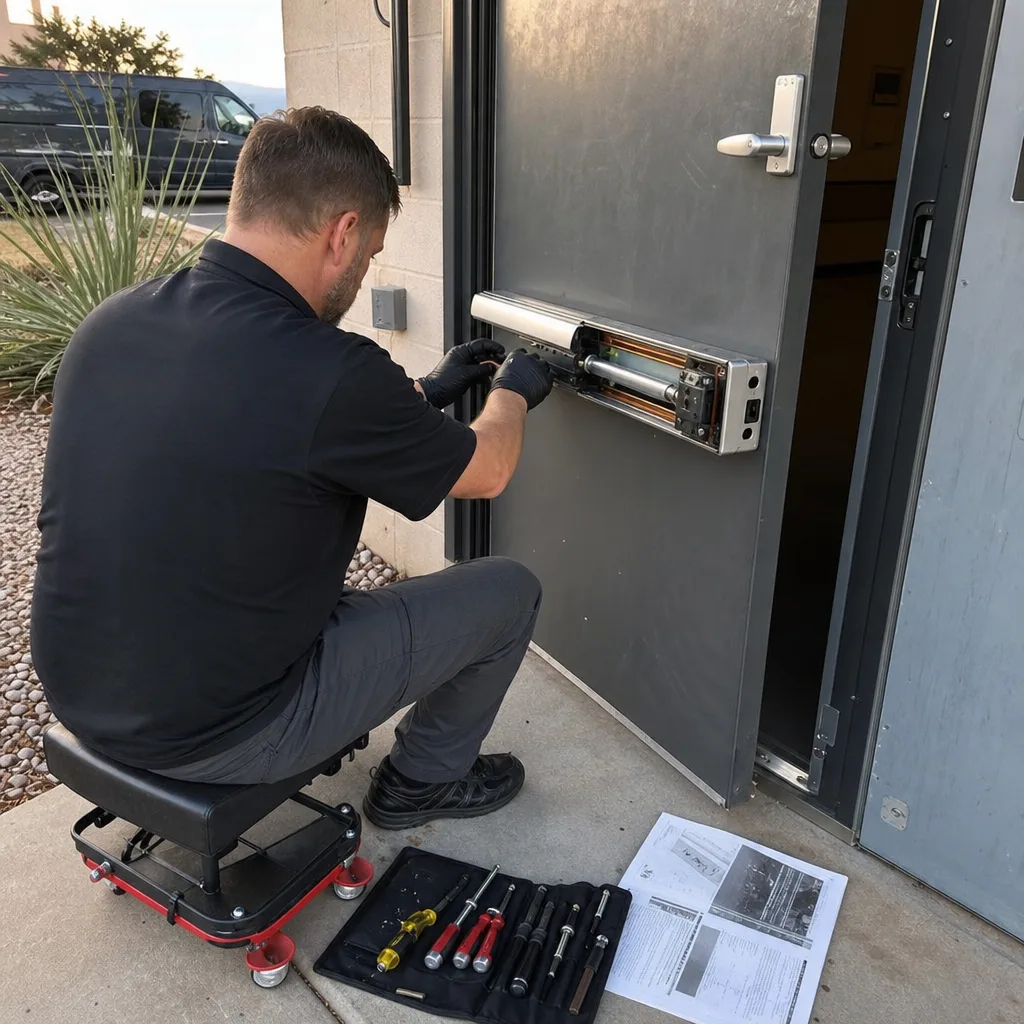
A maintenance visit is scheduled, daylight, non-urgent. A reactive call is after failure, often after hours, with security compromised. The cost gap is substantial and predictable.
| Service Type | Typical Phoenix Range | What’s Included |
|---|---|---|
| Scheduled maintenance visit (per door) | $180-$420 | Lubrication, adjustment, wear inspection, documented photo record, written condition report |
| Reactive call - business hours | $280-$560 | Diagnosis, repair or replacement, no preventive work on other doors |
| Reactive call - after hours or emergency | $340-$780 | Same as above, plus emergency dispatch rate; may require temporary security measures |
| Full closer replacement (if maintenance skipped) | $320-$680 | Closer unit, installation, adjustment, disposal; often urgent |
The math is straightforward. Two maintenance visits across five years costs $360-$840 per door. One skipped maintenance cycle leading to closer failure costs $340-$780 for the emergency call, plus $320-$680 for replacement, plus potential liability if the door fails during business hours. We’ve written quotes for both scenarios hundreds of times. The maintenance visit is always cheaper.
Here’s what happens on a proper maintenance visit:
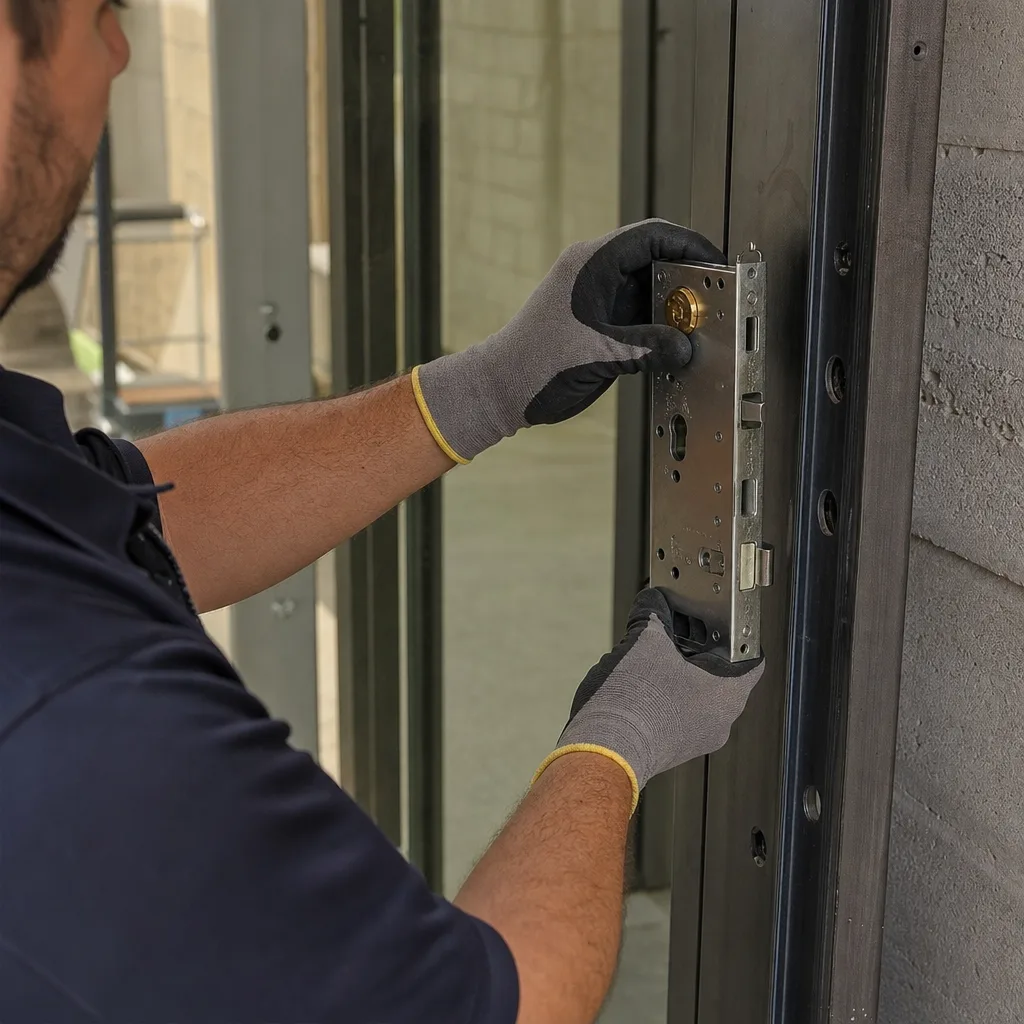
- Visual inspection: Technician photographs each door assembly, notes rust, corrosion, coating failure, or physical damage. Photo record is dated and attached to the work order.
- Functional test: Door opens, closes, latches, and secures through full range. Closer sweep and latch speed measured. Exit device dogging function tested.
- Hardware service: Hinges lubricated with appropriate weight (not WD-40, which attracts dust). Cylinder pins cleaned and lubricated with dry graphite. Strike alignment checked and adjusted.
- Fastener torque: Mounting screws checked for loosening from thermal cycling. Backed-out screws are common on Phoenix metal doors.
- Written report: Condition of each component rated. Recommended actions prioritized. Next service date set based on door orientation and exposure.
The report satisfies Haven Standard Clause 4: every visit produces documented evidence of what was found, what was done, and what should be scheduled next.
Door Closer and Exit Device Maintenance
Door closers are the most neglected and most failure-prone commercial hardware in Phoenix. They’re also the component whose failure creates the most immediate liability: a door that doesn’t close and latch is a fire code violation and a security breach.
We’ve replaced closers in Phoenix buildings where the hydraulic fluid had turned to gel. The closer arm still moved, slowly, but provided no controlled closing. In one case at a medical office near 32nd Street and Shea, the closer failed during monsoon season. Wind pressure held the door open, rain entered the lobby, and the slip-and-fall claim exceeded the cost of ten years of maintenance.
Phoenix-adjusted closer maintenance schedule:
- Every 6 months: Visual inspection for fluid leaks, arm looseness, mounting screw backing. Check sweep and latch speed with timing.
- Every 2.5-3 years: Full service or replacement for south- and west-facing doors. Every 4 years for north- and east-facing.
- After any monsoon damage: Immediate inspection. Wind-driven rain infiltrates closer bodies through worn seals.
Exit devices (panic bars) require parallel attention. The touchpad surface degrades in UV. Internal springs fatigue. The dogging mechanism (the feature that holds the bar retracted for free access during business hours) often fails first because it’s cycled most frequently.
On maintenance visits, we test dogging under load, inspect the touchpad for UV cracking, and check the rim cylinder or mortise cylinder that retracts the latch. In Phoenix, we see touchpad replacement needed at 6-8 years versus the 10-12 year interval common in cooler climates. A replacement touchpad runs $140-$280 installed, quoted in writing before we start.
Brand note: We maintain and install exit devices from major commercial lines, including Yale and Schlage. For high-traffic Phoenix locations, we often recommend Baldwin heavy-duty grade 1 devices with UV-stable coatings, priced in writing with full specifications.
Exterior Keyway Cylinder Inspection and Replacement
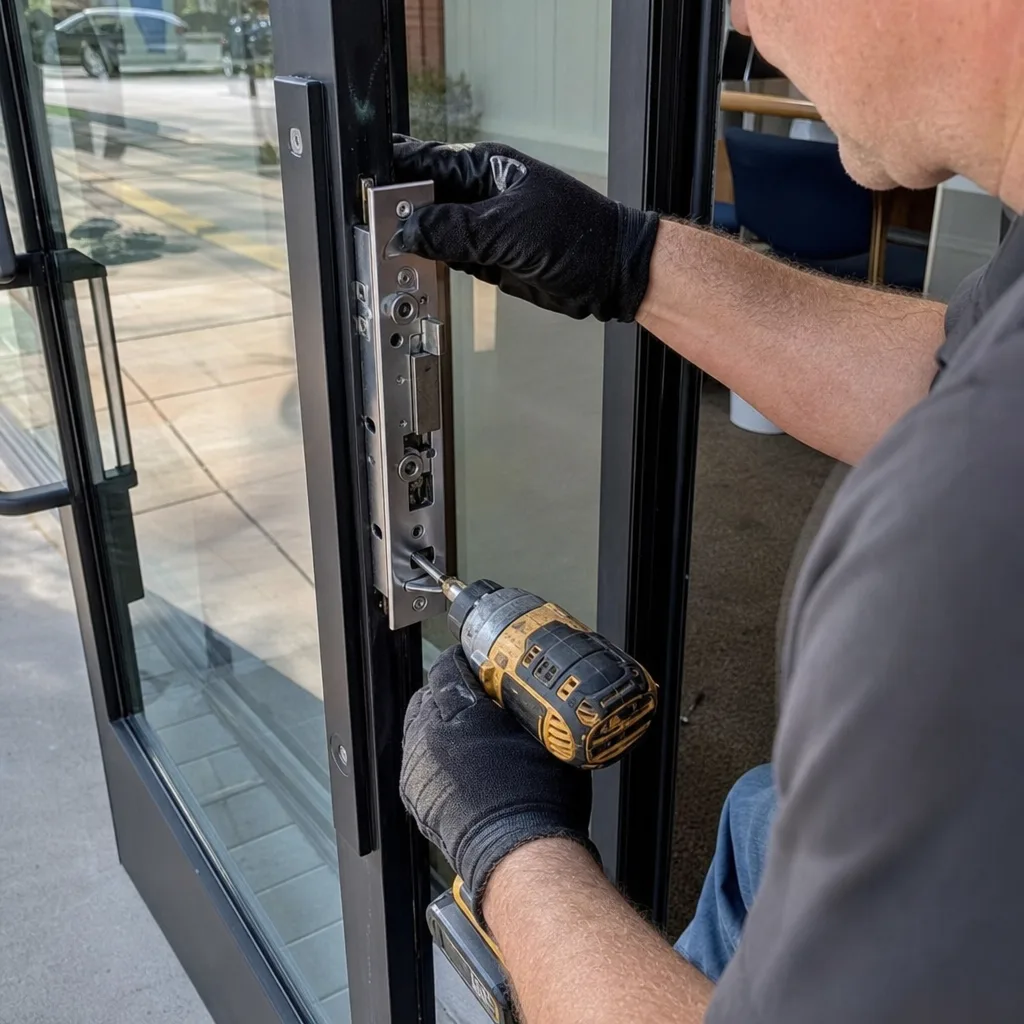
The keyway cylinder is where user contact meets security. In Phoenix, it’s also where UV, dust, and thermal cycling concentrate damage.
We’ve dissected failed cylinders from across the metro area. The pattern is consistent: protective lacquer degrades in 3-4 years of direct exposure. Bare brass oxidizes. Dust and sand particles enter the keyway, abrading pin chambers. The key begins to stick, then binds, then breaks. A broken key extraction on a commercial cylinder costs $120-$240, often after hours, versus $80-$160 for preventive cylinder replacement during scheduled maintenance.
Phoenix cylinder maintenance protocol:
- Annual keyway inspection: Technician inserts a gauge key and checks for binding, roughness, or excessive wear pattern. Photo of keyway mouth documented.
- Lubrication with dry graphite: Never oil-based lubricants in Phoenix dust conditions. Oil attracts particulate and forms abrasive paste.
- Key duplication quality check: Worn original keys cut copies that accelerate cylinder wear. We compare copy against factory spec on calibrated duplicator.
- Replacement trigger: Visible brassing, key binding, or pin chamber wear exceeding 0.003″ tolerance. For high-security cylinders like Medeco or Mul-T-Lock, we measure sidebar slot wear with pin gauge.
High-security cylinders (locks that cannot be picked or bumped by standard tools) require specialized maintenance. Medeco’s angled pin design tolerates less wear before security degrades. We recommend 2-year inspection intervals for exterior Medeco cylinders in Phoenix, with replacement at 5-6 years for south-facing installations. A Medeco cylinder replacement runs $180-$340 depending on keyway complexity, always quoted in writing before we start.
For properties in dust-prone areas, we also specify keyway dust covers, simple spring-loaded caps that reduce particulate ingress by roughly 60% based on our field observations. They’re a $12-$18 add-on that extends cylinder life measurably.
How to Structure a Master Key Audit
Master key systems degrade through use, personnel turnover, and unauthorized duplication. A proper audit determines whether to rekey, remaster, or replace, and the decision has significant cost implications.
We’ve conducted master key audits for Phoenix commercial properties from single-tenant retail to multi-building HOAs in Scottsdale and Tempe. The process is systematic and produces a written scope before any key is cut.
Step 1: Inventory and map the existing system
We document every cylinder location, its keying level (change key, master key, grand master), and the key blanks in circulation. For systems we didn’t install, we often find “convenience” rekeys where a previous locksmith added cylinders without updating the master chart. This creates security gaps where a sub-master may open more than intended.
Step 2: Key control audit
How many keys exist? Who holds them? Are they stamped “Do Not Duplicate”? In Phoenix, unrestricted key duplication is available at dozens of retail locations. A key marked “Do Not Duplicate” without a restricted keyway (like Medeco or Mul-T-Lock) provides no actual control. We report this gap plainly.
Step 3: Physical condition assessment
Each cylinder is removed and inspected for wear, picking damage, or evidence of bumping. We photograph chamber condition. Worn master pins are replaced. Damaged cylinders are flagged for replacement.
Decision matrix:
| Condition | Recommended Action | Typical Phoenix Cost |
|---|---|---|
| Cylinders sound, key control intact, personnel stable | Continue current system, schedule next audit in 2 years | $180-$320 (audit only) |
| Key compromise suspected, cylinders sound | Rekey existing cylinders to new combination | $45-$85 per cylinder, quoted in writing |
| System expanded haphazardly, master chart inaccurate | Remaster: restructure hierarchy, replace some cylinders | $120-$240 per cylinder affected |
| Cylinders worn, key control failed, system outdated | Full replacement with restricted keyway system | $180-$340 per cylinder for high-security |
Zone rotation is an option for large properties. Rather than replacing the entire system, we rotate security zones on a staggered schedule. One wing or building is rekeyed this year, another next year. This spreads cost and maintains continuous key control. We’ve implemented this for a Phoenix medical office complex with 47 suites across three buildings, scheduling rotation to align with lease renewal cycles.
The written audit report includes a new master chart, key control recommendations, and a 3-year maintenance schedule. It satisfies most commercial lease requirements and property insurer documentation requests in Maricopa County.
Access Control and Monsoon Season Power Protection
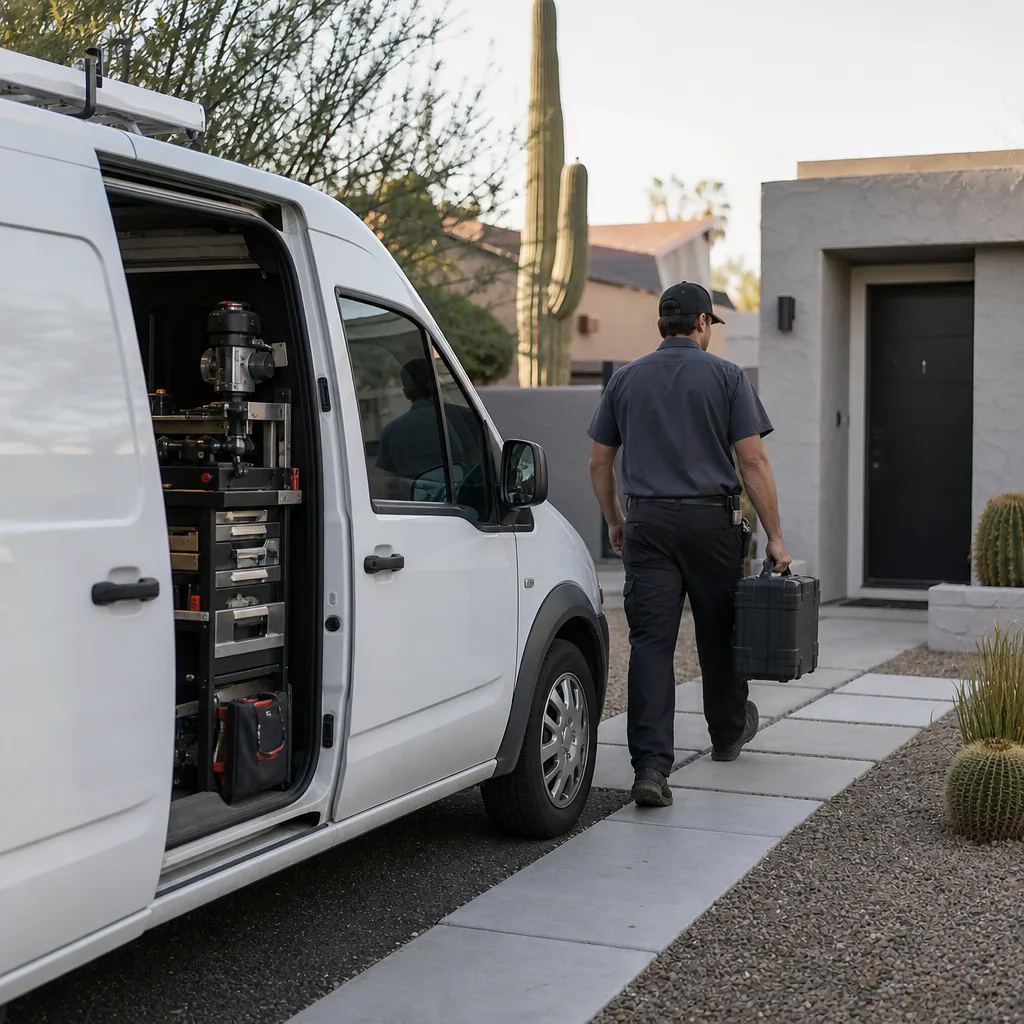
Access control systems in Phoenix face a unique threat pattern: extreme heat degrading electronics, and monsoon season power anomalies destroying power supplies and controllers.
We’ve responded to access control failures across Phoenix during and after monsoon events. The pattern is predictable: lightning-induced surge damages power supply, backup battery is already degraded from heat, system fails open or fails locked. Either condition is a security and safety problem.
Pre-monsoon inspection checklist (conduct in April-May):
- Power supply load test: Measure output voltage under full load. Check ripple with oscilloscope. A failing supply shows voltage sag or excessive AC component before total failure.
- Battery capacity test: Disconnect AC, measure backup runtime. In Phoenix heat, sealed lead-acid batteries typically degrade to 50% capacity in 2.5-3 years versus 4-5 years in climate-controlled environments. We recommend replacement at 3 years regardless of apparent condition.
- Surge protection inspection: Check MOV status indicators. Replace surge devices that have absorbed strikes. Verify grounding electrode connection, critical in sandy Phoenix soil where ground resistance runs higher than in clay regions.
- Controller thermal inspection: Infrared thermometer check of enclosure temperature. Controllers in unconditioned electrical rooms or exterior enclosures often operate above rated temperature. We specify cooling fans or enclosure relocation when indicated.
- Credential reader function: Test every reader with multiple credential types. Clean reader heads of dust accumulation. UV-degraded card stock is common; we flag credentials showing surface cracking.
Post-monsoon (September), we recommend a second inspection focused on surge damage evidence: discolored components, blown fuses, erratic reader behavior, or logged communication errors.
For new access control installations in Phoenix, we specify power supplies with 50°C temperature rating minimum, surge protection on every circuit, and battery capacity sized for 4-hour backup at degraded capacity. The installed cost for a single-door controller with proper Phoenix-specified power protection runs $680-$1,400, quoted in writing with full equipment list.
What Your Maintenance Record Must Include for Insurance
Commercial property insurers and lease agreements in Maricopa County increasingly require documented locksmith maintenance. A verbal assurance or informal log is insufficient. We’ve assisted Phoenix property managers in claims where maintenance documentation determined coverage.
A complete maintenance record contains:
- Property identification: Address, building identifier, door numbers or locations matching fire marshal inspection records.
- Hardware inventory: Manufacturer, model, and serial number for each component. Installation date. Expected service life under Phoenix conditions (not generic manufacturer interval).
- Service history: Date, technician name and identification, work performed, parts replaced, condition ratings, next service due. Photo record of each door assembly before and after service.
- Key control documentation: Master key chart (updated after any rekey). Key issuance log with holder signatures. Restricted keyway certificate if applicable.
- Access control logs: Power supply test results, battery capacity measurements, surge protection status, credential inventory.
- Deficiency and correction tracking: Items flagged for future action, with dates completed or scheduled.
We provide this documentation as standard on every maintenance visit, not as an upgrade. Haven Standard Clause 7 requires it: every visit produces a record sufficient to reconstruct the condition and service history of every door. For Phoenix properties, we also include UV exposure classification (north, south, east, west, or shaded) to justify accelerated service intervals if questioned.
One Phoenix property manager used our maintenance records to successfully dispute a liability claim where a visitor alleged a door closer failed and caused injury. Our documentation showed the closer had been inspected 11 weeks prior, functioned correctly, and was rated for the door size. The claim was withdrawn.
Common Mistakes to Avoid
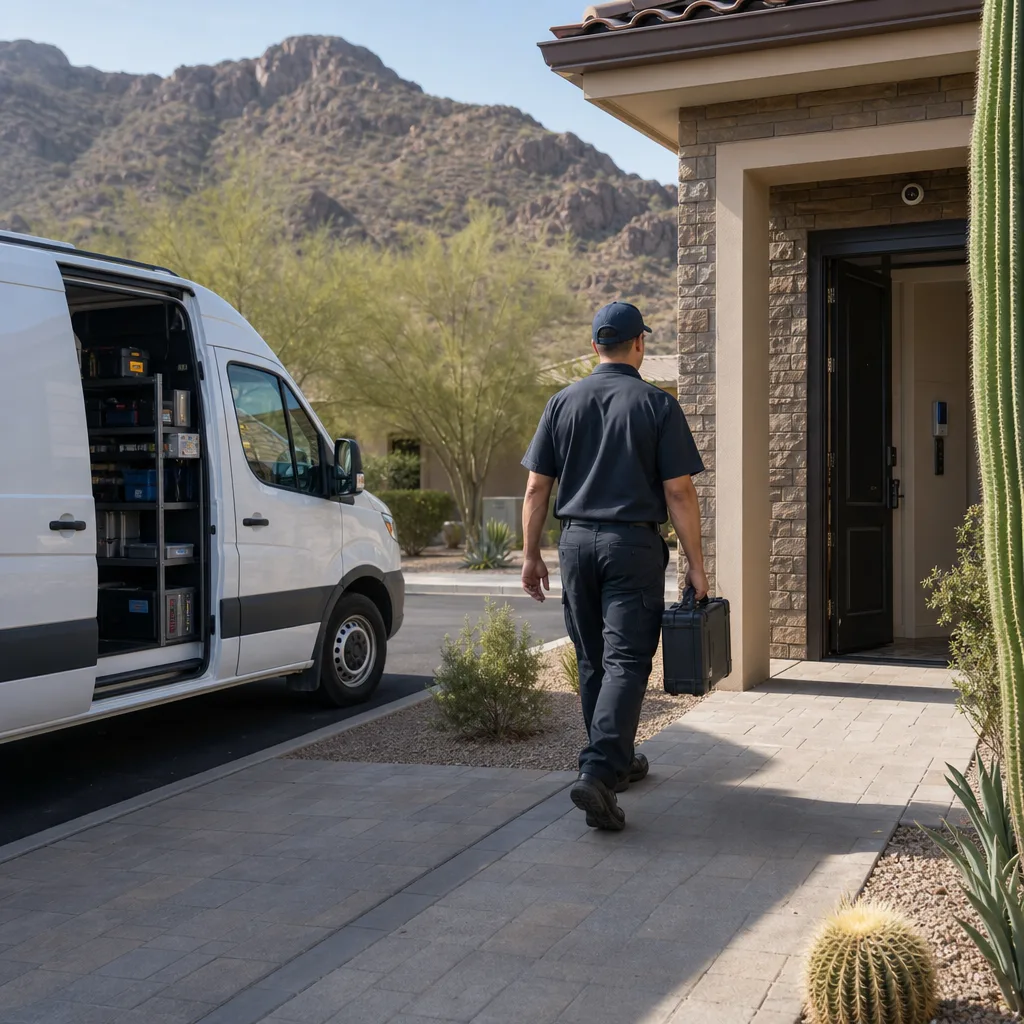
- Following manufacturer intervals without Phoenix adjustment. A closer rated for 10 years in temperate climate needs inspection at 5-6 years on a west-facing Phoenix door. Treating national specs as universal guarantees premature failure.
- Using WD-40 or oil-based lubricants on exterior cylinders. In Phoenix dust conditions, these become abrasive paste. We’ve replaced cylinders where the pin chambers were packed with black sludge from repeated oiling.
- Ignoring keyway orientation. A vertical keyway sheds dust; a horizontal keyway collects it. We see accelerated wear on horizontal keyways in Phoenix and recommend dust covers or orientation change during replacement.
- Skipping post-monsoon inspection. Surge damage often manifests weeks later as intermittent failure. The September inspection catches degraded components before total failure.
- Rekeying without auditing key control. Rekeying a compromised system without addressing unrestricted duplication wastes money. We require key control assessment before quoting any rekey.
- Accepting verbal estimates for commercial work. The bait-and-switch call-out operation is common in Phoenix. Every quote should be written, with itemized scope, before work begins. Haven Standard Clause 1: the price on the phone is the price on the invoice.
- Neglecting to document photo records. Insurance claims and lease disputes require evidence. A photo record taken by a uniformed, background-checked technician with dated metadata satisfies this requirement.
When to Call a Professional
Call when any door fails to close and latch reliably, when keys bind or break, when exit devices dog inconsistently, or when access control shows erratic behavior after electrical storms. These are not maintenance items; they’re active security failures.
Call before monsoon season for preventive inspection if your system hasn’t been serviced in 18 months. Call when personnel turnover exceeds your key control records. Call when your property insurer or lease requires updated maintenance documentation.
Novak Lock & Security Phoenix offers free estimates in Phoenix - call (480) 376-7170. A dispatcher will quote a firm price for the scope you describe, and the technician is contractually prohibited from changing it at the door. Every visit includes a documented photo record performed by a background-checked, uniformed technician. All work is backed by the 365-Day Done Right Promise.
Frequently Asked Questions
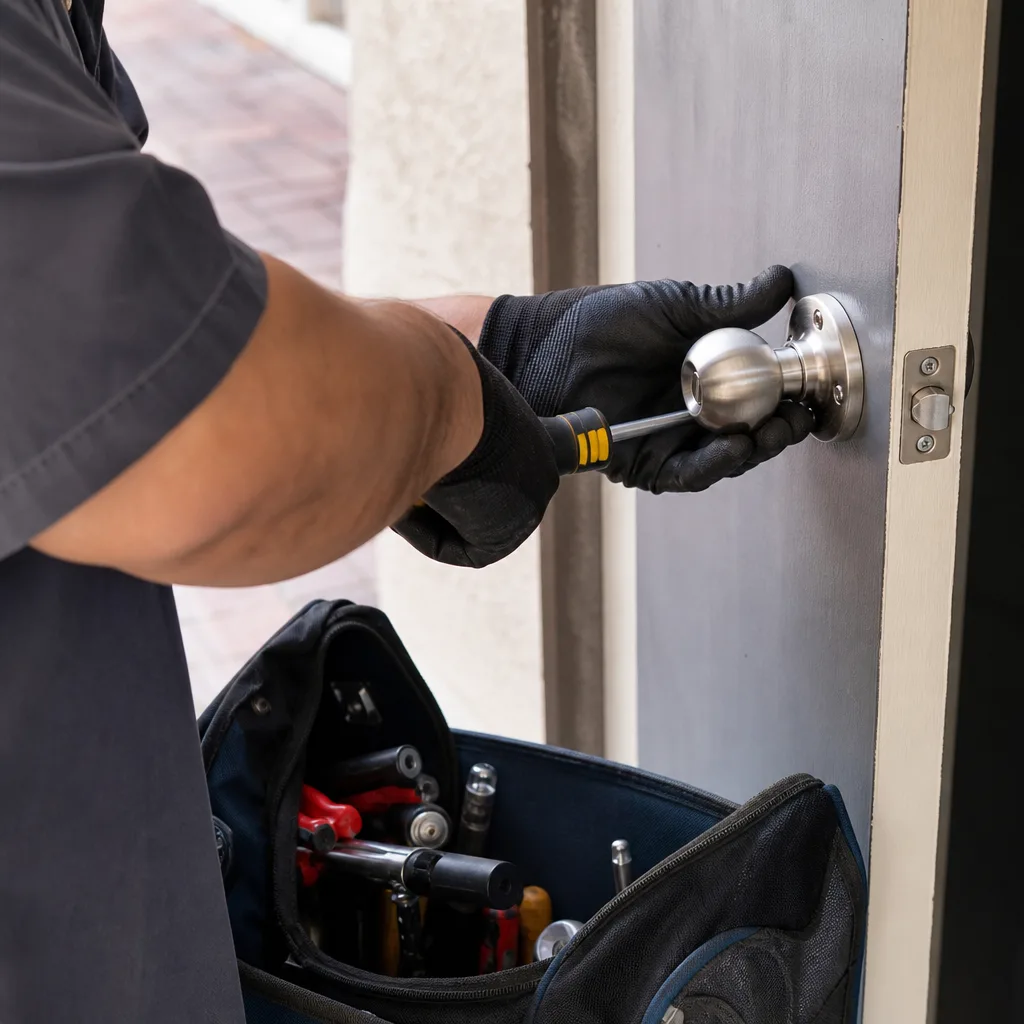
Scheduled maintenance typically runs $180-$420 per door, depending on hardware type and condition. This covers inspection, lubrication, adjustment, and written documentation. Emergency reactive calls cost $340-$780. We quote firm prices in writing before dispatch, per Haven Standard Clause 1.
Yes. The dispatcher quotes a firm price based on your description, and the technician is contractually prohibited from changing it at the door. This rule has been in place since 2002 and is the foundation Novak Lock & Security was built on. If the scope changes because conditions differ from description, we stop and obtain written approval before proceeding.
Twice yearly: April-May before monsoon season, and September-October after peak UV exposure. South- and west-facing doors need closer inspection every 2.5-3 years. North- and east-facing doors can extend to 4 years. These intervals reflect Phoenix conditions, not manufacturer specs written for temperate climates.
Rekeying changes the pin combination in existing cylinders so old keys no longer work. Remastering restructures the entire key hierarchy, often replacing some cylinders and creating new master key levels. Rekeying addresses key compromise. Remastering fixes system expansion errors, outdated hierarchy, or security restructuring needs. We audit first and recommend based on findings, not assumptions.
Check for surge protection devices on every power and data circuit, with visible status indicators. Verify battery backup runtime with a load test, not just a voltage check. Inspect grounding connections, critical in high-resistance Phoenix soil. If your system lacks these or you can’t verify their status, schedule inspection before June. Monsoon surge damage is preventable and expensive.
Yes. Our maintenance records include all elements Maricopa County insurers typically require: dated photo records, technician identification, hardware inventory with serial numbers, condition ratings, and corrective action tracking. We’ve provided documentation for claims and renewal applications across Phoenix. Bring your insurer’s specific requirements and we’ll format accordingly.
The Bottom Line
Phoenix commercial hardware fails on an accelerated schedule that national maintenance guidelines don’t address. Door closers degrade in 5-6 years, not 10. Exterior cylinders wear from UV and dust. Access control power supplies fail from heat and monsoon surges. The checklist above adjusts intervals for local reality.
The cost difference between scheduled maintenance and reactive emergency calls is $160-$360 per door per incident, and reactive calls often trigger replacement of components that preventive service would have preserved. Documented maintenance also satisfies insurer and lease requirements that informal service cannot. Browse our more guides & resources for additional Phoenix-specific maintenance insights.
We’ve maintained commercial properties across Phoenix since 2002 under The Haven Standard, with written prices before every job and documented records after. The 365-Day Done Right Promise applies to every lock installation, rekey, and service call. Call (480) 376-7170 for a free estimate. We’ll quote a firm price for your specific scope, and that price will be the price on the invoice.
Written by Daniel Novak, Owner at Novak Lock & Security Phoenix, serving Phoenix since 2002.