
Last updated September 25, 2026
Non-destructive entry first, always - and we re-key Schlage, Kwikset, and Baldwin locks on the spot while you watch
You get a price before we start. It does not change when we arrive. No surprises.
The Complete Guide to Locksmith in Phoenix
A 2023 FTC sweep found that “local locksmith” ads in major metros were frequently run by a handful of national operators cycling through hundreds of fake storefronts - Phoenix was among the targeted cities. The result: a resident locked out of their Arcadia home at midnight might call a number with a 602 area code and reach a dispatcher in Florida who quotes $19, then sends a subcontractor who demands $280 at the door. This guide maps how Phoenix’s locksmith market actually works, what services cost in this market, and how to tell the difference between a legitimate local operation and a call-center shell before you hand over your address. For DIY vs Professional Locksmith: The Phoenix Homeowner’s Decision Guide, see our dedicated comparison.
Quick Answer
A locksmith in Phoenix provides lock installation, rekeying, emergency lockout response, safe work, and commercial access control across the Valley. Expect to pay $85-$150 for a residential lockout during business hours, $18-$35 per cylinder for rekeying, and $180-$400 for deadbolt installation including hardware. The critical difference in this market is whether the company you’re calling answers the phone in Phoenix and dispatches its own employees, or routes you through a national aggregator that sells your job to the lowest bidder. Our How to Hire a Locksmith Contractor in Phoenix: A Step-by-Step Guide walks through vetting questions to ask before booking.
Table of Contents
- How the Phoenix Locksmith Market Actually Works
- How to Vet a Phoenix Locksmith in One Phone Call
- The Five Services Phoenix Residents Call For Most
- What Locksmith Services Cost in Phoenix
- Response Times: Central Phoenix vs. the Growth Corridors
- The Documentation a Locksmith Should Leave Behind
- Lock Brands and Security Grades: What Phoenix Homes Actually Need
- Commercial Locksmith Work: What Changes
How the Phoenix Locksmith Market Actually Works
Phoenix’s locksmith market splits into two tiers that most residents don’t know exist until they’ve been burned.
Tier one: Independently owned shops with physical addresses in Maricopa County, state-issued contractor licenses, and technicians who are employees, not gig workers. These operations answer their own phones, quote firm prices, and carry inventory for common Phoenix installations. Novak Lock & Security Phoenix operates in this tier. So do a handful of other long-standing Valley shops.
Tier two: National lead aggregators that buy Google Ads for hundreds of fake “local” listings. They operate call centers, often out of state, and sell your job to independent subcontractors who pay a fee for the lead. The subcontractor has no contractual relationship with you, no brand reputation to protect, and every incentive to inflate the price once they’re at your door.
The FTC’s 2023 action targeted this second tier specifically, but the operators adapt faster than enforcement. In Phoenix, we’ve seen the same phone numbers reappear under new business names within weeks of a shutdown.
Why Phoenix is particularly vulnerable: our sprawling geography and rapid growth create natural information gaps. Someone who just moved to Laveen from Minnesota has no baseline for what a rekey should cost, no memory of which shop was on 7th Street ten years ago, and no neighbor who’s “used a guy” to recommend. The aggregators exploit this precisely.
Three structural factors make Phoenix distinct:
- Transient population: Maricopa County adds roughly 60,000 residents annually. New arrivals are disproportionately likely to need locksmith services (new home purchases, lost keys in a move) and disproportionately unlikely to know the local market.
- Extreme heat: At 118°F, a locked car with a child or pet inside becomes a medical emergency, not an inconvenience. Desperate callers are easier to overcharge.
- Regulatory fragmentation: Arizona does not require a state locksmith license. Any contractor with a ROC-issued residential or commercial license can legally perform locksmith work. This lowers barriers for legitimate operators and illegitimate ones alike.
The practical result: price variation in Phoenix is wider than in regulated states. We’ve seen quotes for the same residential rekey range from $89 to $340, depending entirely on whether the caller reached a tier-one shop or a tier-two aggregator.
How to Vet a Phoenix Locksmith in One Phone Call
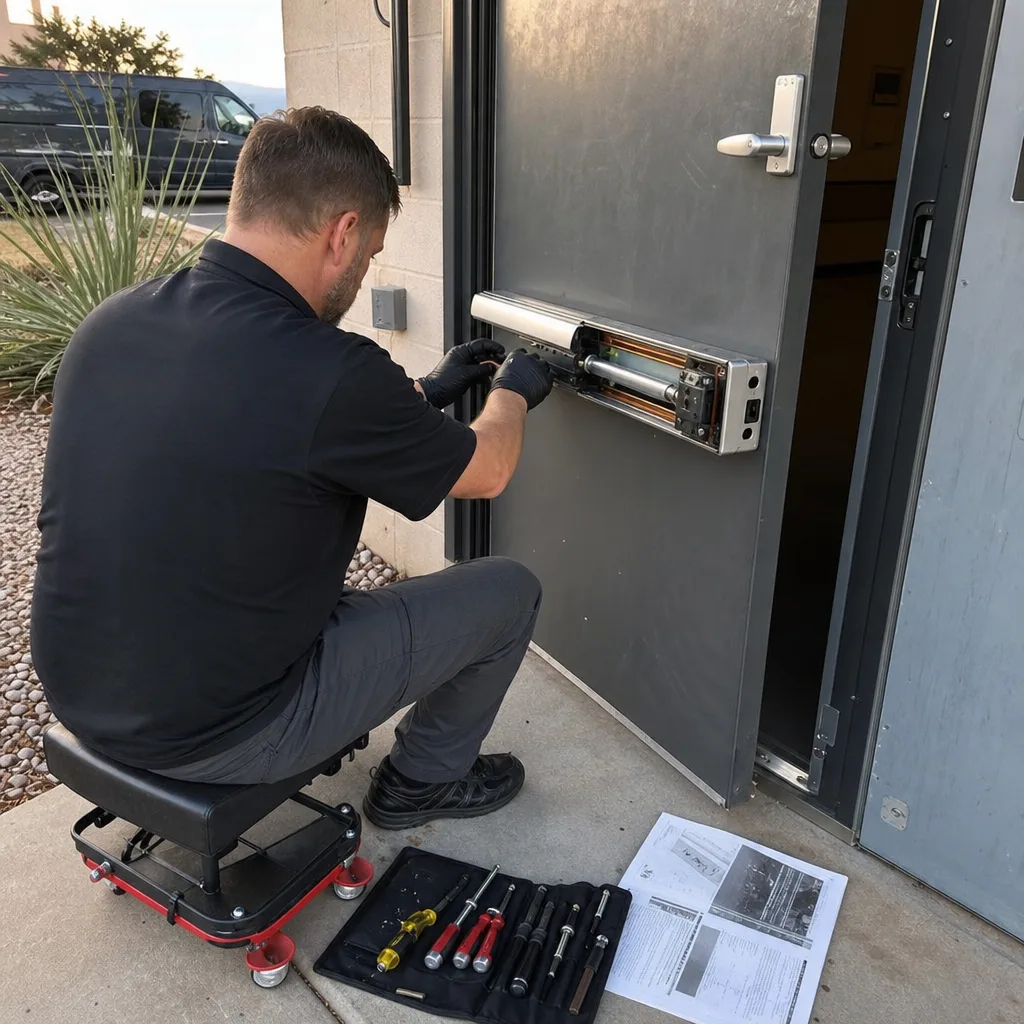
You can identify which tier you’re dealing with before you reveal your address. Here’s the sequence:
- Ask where they’re located. A legitimate Phoenix shop names a specific address you could drive to - “we’re on Indian School near 32nd Street,” or “our shop is in south Scottsdale, we cover all of Phoenix.” An aggregator gives a vague answer (“we have technicians all over the Valley”) or deflects to “what’s your address so we can see who’s closest?”
- Ask for a firm price for your specific job. Say: “I need two deadbolts rekeyed to match one key. What’s the total price, including all fees, before anyone comes out?” A tier-one shop quotes a number. An aggregator quotes a “service call” or “starting at” figure and says the technician will assess on site. This is the bait.
- Ask if the technician is an employee. Direct employment means training standards, background checks, and accountability. Subcontractors are independent operators with no oversight beyond the single job.
- Verify the address on Google Maps. Search the business name plus Phoenix. If the pinned location is a strip mall suite, residential home, or empty lot, you’re looking at a shell listing. Real shops have real storefronts or industrial units with signage.
- Check the ROC license. Arizona’s Registrar of Contractors database is public. Search the company name or the owner’s name. A valid ROC number with active status is minimum viable legitimacy.
At Novak Lock & Security Phoenix, we answer these questions without hesitation. Haven Standard Clause 1 requires it: the price on the phone is the price on the invoice. The technician cannot change it. This rule has been in place since 2002.
The Five Services Phoenix Residents Call For Most
After 60,000+ jobs across the Valley, our records show consistent patterns. These are the services that dominate Phoenix locksmith work, what each involves, and what drives the price.
Car Lockouts
Phoenix’s summer heat makes this the most urgent call we receive. A car lockout in central Phoenix typically runs $85-$120 during business hours, $120-$180 after hours. The variable is vehicle complexity: older mechanical locks open faster than modern keyless-entry systems with encrypted transponders.
Critical detail for Phoenix: never accept a drill-first proposal for a car lockout. A trained automotive locksmith carries picks, wedges, and long-reach tools that open 95% of vehicles without damage. Drilling a door lock destroys a $400-$800 component to solve a $100 problem. We’ve replaced too many drilled locks that a competent technician could have picked in two minutes.
Rekeys After Move-In
The most common residential call. You bought a home in Ahwatukee, Encanto, or one of the new builds in Queen Creek. You don’t know who has keys. Rekeying changes the internal pin configuration so old keys no longer operate the lock, without replacing the hardware.
Standard rekeying runs $18-$35 per cylinder in Phoenix, with most homes having 2-4 cylinders. The job takes 15-30 minutes. We always recommend rekeying at move-in - not because the seller is untrustworthy, because you cannot account for every contractor, neighbor, dog walker, or relative who was given a spare over the years.
Deadbolt Upgrades
Phoenix’s burglary rate tracks slightly above national averages, and single-cylinder deadbolts remain the most common point of forced entry. Upgrading from a Grade 3 (residential light duty) to Grade 2 (heavy residential) or Grade 1 (commercial duty) deadbolt meaningfully changes how long a kick-in attempt takes.
Installation with hardware runs $180-$400 depending on grade and brand. A residential locksmith in Phoenix should explain the ANSI grading system and show you the difference in bolt throw, strike plate depth, and screw length - not just hand you a catalog.
Safe Work
Phoenix’s gun ownership rates and cash-based business economy create steady demand for safe opening, combination changes, and bolt-down installation. Safe work is specialized: a technician without safe-specific training can destroy a $2,000 container trying to open it.
Opening a locked safe with a lost combination runs $150-$400. Drilling and repair (when the lock mechanism has failed) runs $300-$600. New safe installation with bolt-down runs $200-$500 depending on weight and floor type. We document the safe’s serial number, lock type, and installation method in every photo record.
Commercial Master Key Systems
Phoenix’s commercial growth - medical offices in midtown, warehouses in southwest Phoenix, retail in Scottsdale-adjacent corridors - drives demand for master key systems. These allow one key to open all locks in a building while subordinate keys open only specific doors.
Commercial locksmith work in Phoenix differs from residential in process: it’s surveyed and scheduled, not dispatched for emergency response. A proper master key system requires a site visit, a written scope, and a flat per-lock price. Expect $45-$85 per cylinder for master keying, with system design fees for complex hierarchies.
What Locksmith Services Cost in Phoenix
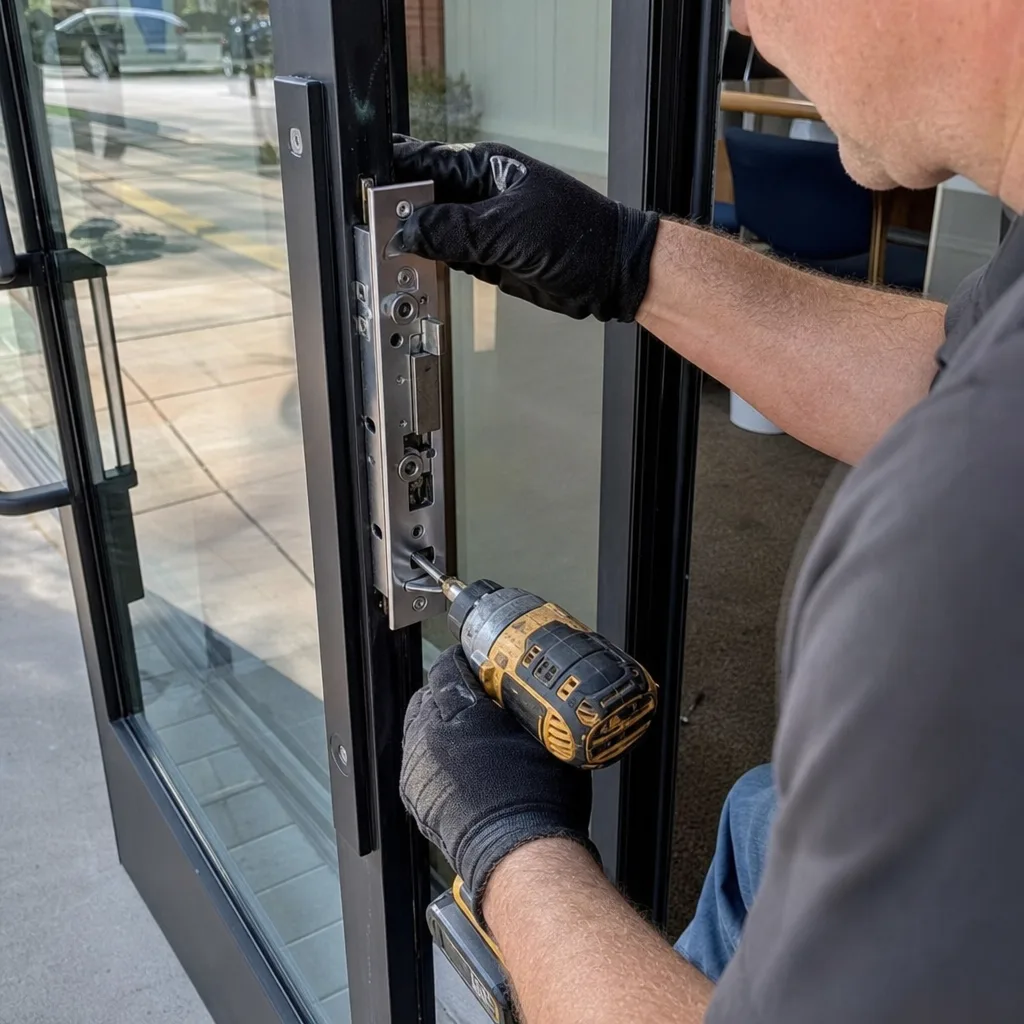
These ranges reflect our actual invoices across Phoenix from 2022-2024. For a deeper dive, see our Locksmith Cost Breakdown: The Phoenix Homeowner’s Reference for 2026; the figures here are specific enough to benchmark against, general enough to account for variation in hardware grade and job complexity.
| Service | Typical Range | What Affects Price |
|---|---|---|
| Residential lockout (business hours) | $85-$150 | Lock type, time of day, location |
| Residential lockout (after hours) | $120-$220 | After 8 p.m. and weekends carry higher labor rates |
| Car lockout | $85-$180 | Vehicle year/make/model, keyless entry complexity |
| Rekey per cylinder | $18-$35 | Cylinder type (standard vs. high-security) |
| Deadbolt installation (with hardware) | $180-$400 | Grade (1/2/3), brand, door prep needed |
| Lock repair (mechanical) | $75-$200 | Part availability, extent of wear |
| Safe opening (lost combination) | $150-$400 | Safe type, lock generation |
| Safe opening (drill and repair) | $300-$600 | Damage extent, replacement lock cost |
| Master key system (per cylinder) | $45-$85 | System hierarchy complexity |
| Access control card reader install | $400-$900 per door | Standalone vs. networked, credential type |
Two pricing practices separate legitimate Phoenix locksmiths from bait-and-switch operators:
- Firm quotes vs. estimates: Arizona consumer protection law distinguishes between a binding quote and an estimate. A quote, once accepted, forms a contract. An estimate is merely a projection. Tier-two operations exploit this by giving “estimates” over the phone that have no legal weight, then claiming “unforeseen complications” at your door. At Novak Lock & Security Phoenix, we quote, we don’t estimate. Haven Standard Clause 1.
- No call-out surcharges: Some Phoenix operators advertise a low “service call” fee, then add separate charges for labor, parts markup, and “trip fees” on arrival. Our invoices name one all-inclusive price before dispatch. The price on the phone is the price on the invoice.
We also offer a free second opinion on any written estimate. Bring us a competitor’s quote and we’ll review it at no charge. We’ve found that tier-two estimates frequently omit necessary hardware or inflate labor hours.
Response Times: Central Phoenix vs. the Growth Corridors
Phoenix’s geography creates real variation in how fast a locksmith can reach you. Understanding this prevents frustration and helps you plan.
Central Phoenix and inner suburbs: Downtown, Midtown, Arcadia, the Biltmore area, and adjacent Scottsdale and Tempe neighborhoods typically see 20-40 minute response times during business hours. Technician density is higher, traffic patterns are predictable, and most established shops position vehicles to cover this core.
West Phoenix and Glendale: 30-50 minutes. The grid system helps, but distance from central depots adds time.
South Phoenix and Laveen: 35-60 minutes. Rapid residential growth has outpaced service infrastructure. We’ve added dedicated south Phoenix coverage specifically because response windows were stretching too long for our standard.
Estrella and far southwest: 45-75 minutes. These master-planned communities are 25+ miles from central Phoenix. Even with a technician already in the area, the road network limits speed.
Queen Creek, San Tan Valley, and southeast growth corridors: 50-90 minutes. Some Phoenix shops decline to serve this area entirely, referring callers to Gilbert or Mesa operations. We maintain coverage but schedule rather than dispatch for non-emergencies.
For after-hours emergencies in outlying areas, the practical advice is: call earlier rather than later. A lockout at 10 p.m. in Queen Creek may face 90-minute response because fewer technicians are on night rotation that far out. If you’re in a growth corridor, consider keeping a spare key with a trusted neighbor as a hedge.
The Documentation a Locksmith Should Leave Behind
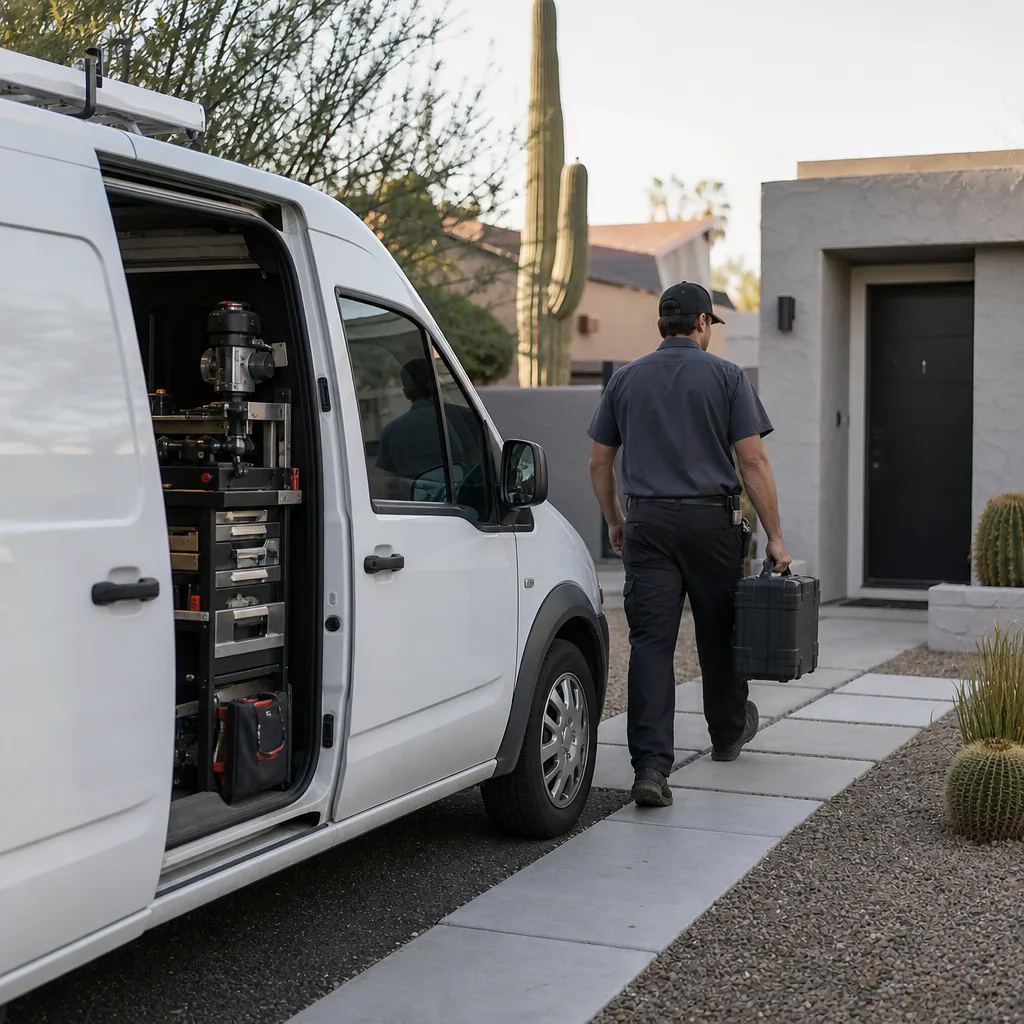
The work isn’t done when the lock turns. The paperwork matters for warranty claims, insurance disputes, and your own records. Here’s what a legitimate Phoenix locksmith provides:
- Written invoice naming every part replaced. Not “lock repair - $200.” The invoice should specify: “Schlage B60N Grade 1 single-cylinder deadbolt, satin nickel finish; two 3-inch mounting screws; existing strike plate reused.” This granularity protects both parties.
- Labor rate and time applied. “Labor - 1.5 hours at $95/hour.” Not a lump sum with no breakdown.
- Technician’s name and identification. Our technicians provide their first name and technician number on every invoice. The photo record includes their image at your door, timestamped.
- Warranty terms in writing. Our 365-Day Done Right Promise covers every installation, rekey, and emergency call. The invoice states: “Haven Standard Clause 7 - 365-day workmanship warranty. Defects in installation or parts failure from normal use repaired at no charge.”
- ROC license number. Arizona law requires this on contracts over $1,000, but reputable shops include it routinely.
The photo record is particular to our operation and increasingly standard among tier-one shops. We leave a printed card with a QR code linking to timestamped photos of the completed work, the technician at your door, and any hardware condition we found. This isn’t marketing - it’s documentation that has resolved disputes and insurance claims.
If a locksmith in Phoenix hands you a handwritten receipt with no company name, no address, and no itemization, you’ve likely used a tier-two subcontractor. Keep looking.
Lock Brands and Security Grades: What Phoenix Homes Actually Need
Phoenix’s housing stock spans 1950s ranch homes in Willo, 1980s subdivisions in Ahwatukee, and new construction in Desert Ridge. The right lock depends on the door, not the decade.
Entry-grade residential: Kwikset and Schlage’s standard lines. Adequate for interior doors and low-risk exterior applications. ANSI Grade 3. Typical lifespan: 5-7 years in Phoenix’s dust and heat before internal wear affects operation.
Heavy residential / light commercial: Schlage B-series, Baldwin Estate, Yale Assure. ANSI Grade 2. Longer bolt throw, heavier strike plates, better resistance to forced entry. We install these on most Phoenix front doors unless the customer specifies higher security.
High-security: Mul-T-Lock, Medeco, Abloy. ANSI Grade 1 with restricted keyways that cannot be duplicated without authorization. Pick-resistant, bump-resistant, drill-resistant. These matter for Phoenix homes with art collections, gun safes, or home offices holding sensitive client data. Mul-T-Lock’s MT5+ system is particularly common in Paradise Valley and Scottsdale-adjacent installations.
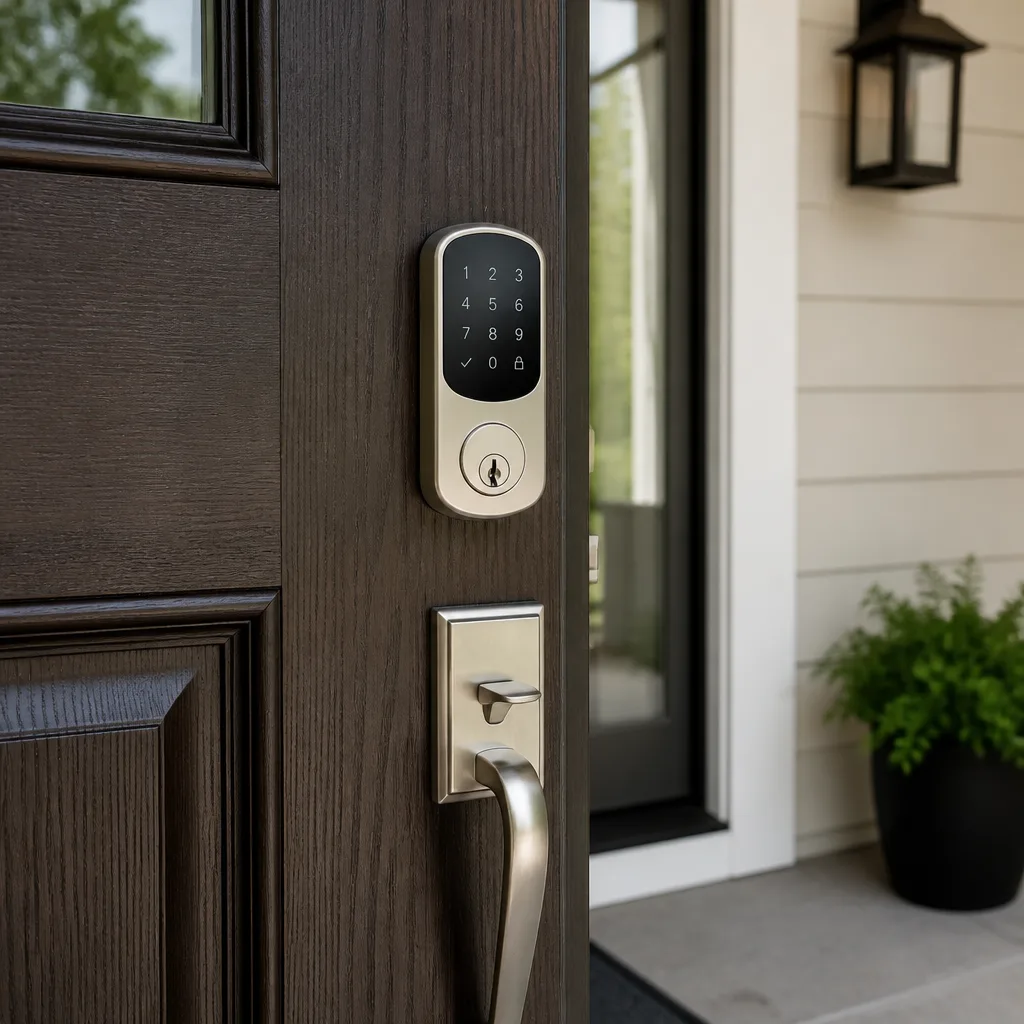
Smart locks: Yale Assure Lock SL, Schlage Encode. Growing share of Phoenix new construction and renovation. Critical consideration: battery life in extreme heat. We’ve replaced failed smart locks in south-facing doors where internal temperatures exceeded operating specs. A mechanical backup keyway is essential.
We are factory-authorized for premium brands including access control systems in Phoenix using Sargent and Yale hardware. Authorization matters: it means factory training, direct parts access, and warranty validity. Unauthorized installation voids manufacturer warranties on high-security cylinders.
Commercial Locksmith Work: What Changes
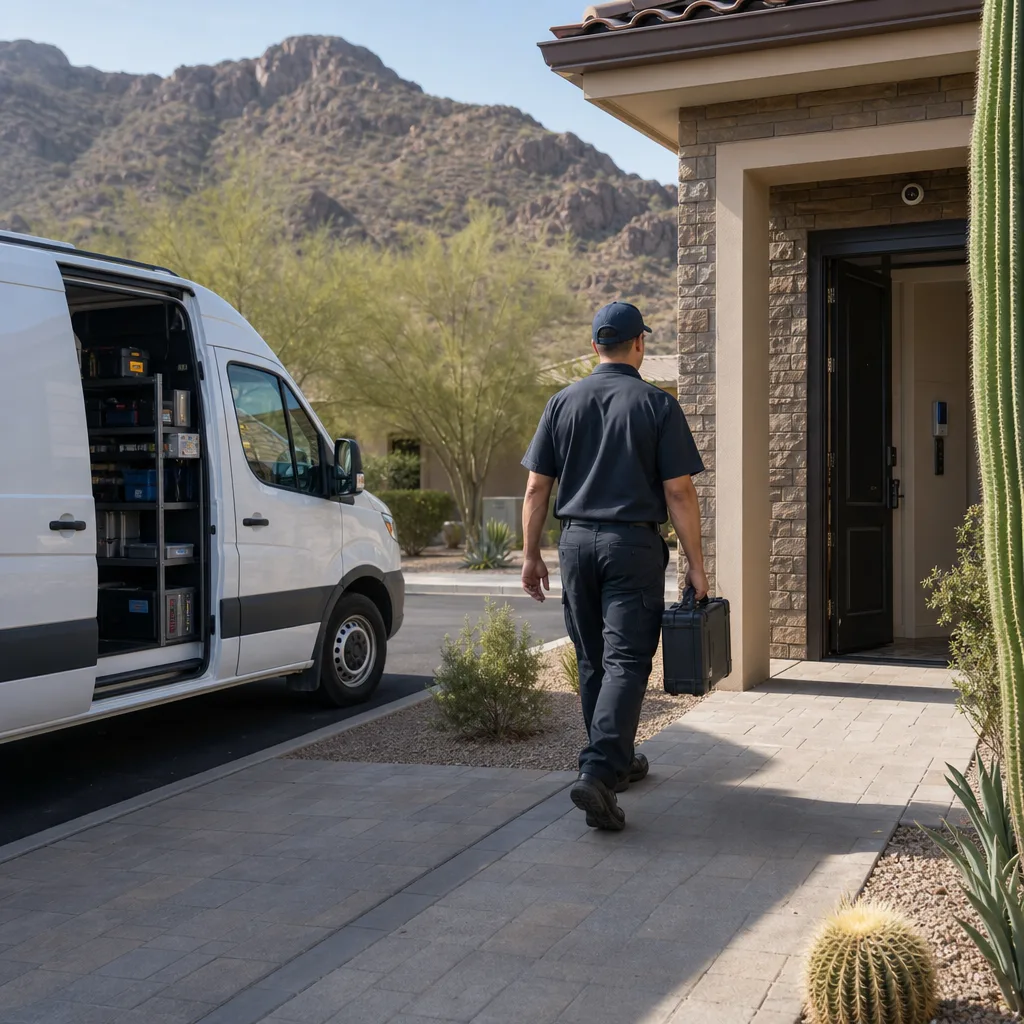
Commercial locksmithing in Phoenix operates on different rules than residential. The buildings are larger, the codes are stricter, and the liability exposure is higher.
Fire code compliance: Maricopa County enforces NFPA 101 and the International Building Code for commercial egress. Panic hardware, delayed egress locks, and electric strikes must be installed to code with proper signage. We’ve corrected installations by non-specialists who violated egress requirements, creating liability for the building owner.
ADA compliance: Lever handles, not knobs, on accessible routes. Proper mounting heights. These aren’t preferences - they’re federal requirements with specific enforcement in Phoenix’s commercial inspection process.
Key control: Commercial master key systems require signed key control logs. We provide these as standard, with duplicate request forms that track who holds which key. For Phoenix medical offices and financial services, this documentation is often required by accrediting bodies.
Access control integration: Card readers, biometric systems, and cloud-managed locks are increasingly standard in Phoenix commercial construction. Commercial locksmith work now overlaps with low-voltage contracting. We coordinate with electricians and IT staff to ensure PoE (Power over Ethernet) runs and network segmentation support the security design.
Pricing for commercial work is always surveyed and quoted in writing. We do not dispatch for “emergency master keying.” The scope is defined, the price is fixed, and the work is scheduled.
Common Mistakes to Avoid
- Calling the first Google result without checking Maps. The top ad is often a tier-two aggregator with the highest bid, not the best service. Spend 60 seconds verifying a real Phoenix address.
- Accepting “starting at” pricing for emergency work. In Arizona, this is an estimate, not a binding quote. The final price frequently exceeds the phone figure by 300% or more.
- Ignoring ANSI grades. A $25 deadbolt and a $180 deadbolt look similar in packaging. The difference is bolt throw, metal thickness, and resistance to forced entry. Ask specifically for Grade 2 or Grade 1 on exterior doors.
- Rekeying only the front door after purchase. We’ve found keys in garages, side gates, and backyard sheds that previous owners handed out casually. Rekey every cylinder that controls access to the home.
- Installing smart locks without mechanical backup. Phoenix’s summer heat kills batteries faster than manufacturer specs suggest. Every smart lock should have a physical key override.
- Hiring a handyman for lock installation. Proper deadbolt installation requires precise boring, strike plate alignment, and door frame reinforcement. Misaligned latches cause premature wear and security gaps we’ve documented in hundreds of Phoenix homes.
- Neglecting to get warranty terms in writing. Verbal promises expire when the technician leaves. The invoice should state what is covered, for how long, and who to contact.
When to Call a Professional
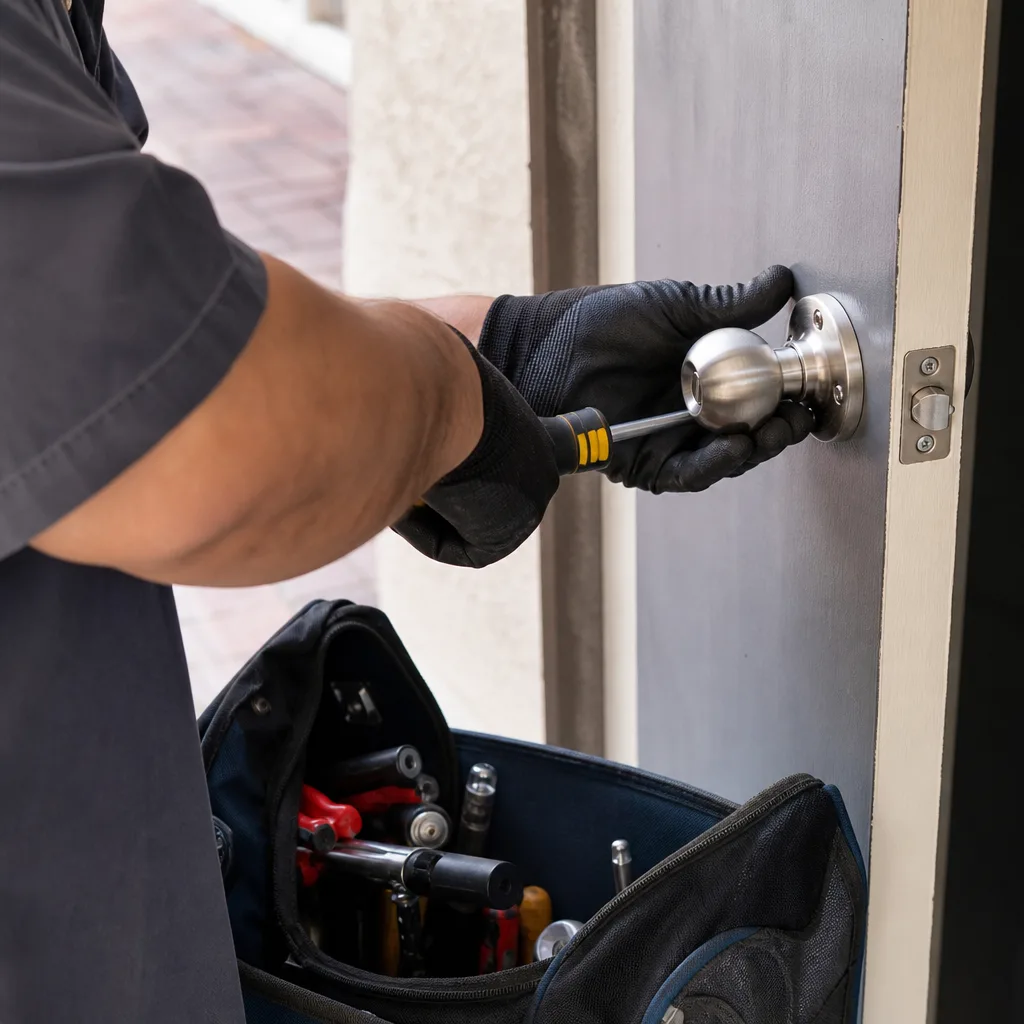
Call a locksmith when you’re locked out, when you’ve moved into a new home, when a lock is sticking or failing to engage smoothly, when you need to restrict or restore access for tenants or employees, or when you’re upgrading security after a break-in or threat. For commercial properties, call before you install new hardware to confirm code compliance.
DIY lock picking damages pins and voids warranties. Drilling a lock you can’t open destroys a $200 component to avoid a $100 service call. Rekeying requires specialized tools and pin kits that cost more than the service for a single home.
Novak Lock & Security Phoenix offers free estimates in Phoenix. Call (480) 376-7170. We’ll quote a firm price on the phone, dispatch a background-checked, uniformed technician, and leave a documented photo record of the completed work.
Frequently Asked Questions
Residential lockouts typically run $85-$150 during business hours, rekeying runs $18-$35 per cylinder, and deadbolt installation with hardware runs $180-$400. The exact price depends on lock type, time of day, and location within the Valley. Call (480) 376-7170 for a firm quote - estimates are free.
At Novak Lock & Security Phoenix, yes. Haven Standard Clause 1 prohibits our technicians from changing the phone quote at the door. The price on the phone is the price on the invoice, with no exceptions since 2002. If a Phoenix locksmith won’t commit to this, you’re dealing with an estimate, not a quote.
Central Phoenix and inner suburbs: 20-40 minutes. West Phoenix and Glendale: 30-50 minutes. South Phoenix and Laveen: 35-60 minutes. Queen Creek and far southeast: 50-90 minutes. After-hours response takes longer in outlying areas. Call (480) 376-7170 and we’ll give you a specific ETA for your address.
Ask for a specific Phoenix address, verify it on Google Maps, ask if technicians are employees (not subcontractors), and check the ROC license online. A legitimate shop answers directly. An aggregator deflects. The FTC’s 2023 sweep found fake listings concentrated in metros exactly like Phoenix - verification matters.
Rekey if the hardware is in good condition and Grade 2 or better. Replace if it’s Grade 3, visibly worn, or doesn’t match your security needs. Phoenix’s heat and dust accelerate internal wear, so we assess cylinder condition before recommending. Rekeying runs $18-$35 per cylinder; replacement with installation runs $180-$400 per lock.
Standard deadbolts (Grade 3) resist casual forcing but yield to sustained attack. High-security cylinders like Mul-T-Lock and Medeco use restricted keyways, hardened inserts, and complex pin configurations that resist picking, bumping, and drilling. For Phoenix homes with valuable collections or security-sensitive occupations, the upgrade is meaningful. We install both and explain the trade-offs without pressure.
The Bottom Line
Phoenix’s locksmith market rewards the informed and punishes the hurried. The two-tier structure - local shops versus national aggregators - creates real differences in price honesty, technician quality, and accountability. Verify before you call, demand a firm quote not an estimate, and insist on itemized documentation. The legitimate shops in this market, including ours, have nothing to hide and everything to prove with every job. The 365-Day Done Right Promise, the written price before work starts, and the documented photo record are not marketing phrases. They’re the operational standard we’ve applied since 2002.
Written by Daniel Novak, Owner at Novak Lock & Security Phoenix, serving Phoenix since 2002.