
Non-destructive entry first, always - and we re-key Schlage, Kwikset, and Baldwin locks on the spot while you watch
You get a price before we start. It does not change when we arrive. No surprises.
Schlage Car Key Cutting: The Phoenix Owner’s Guide
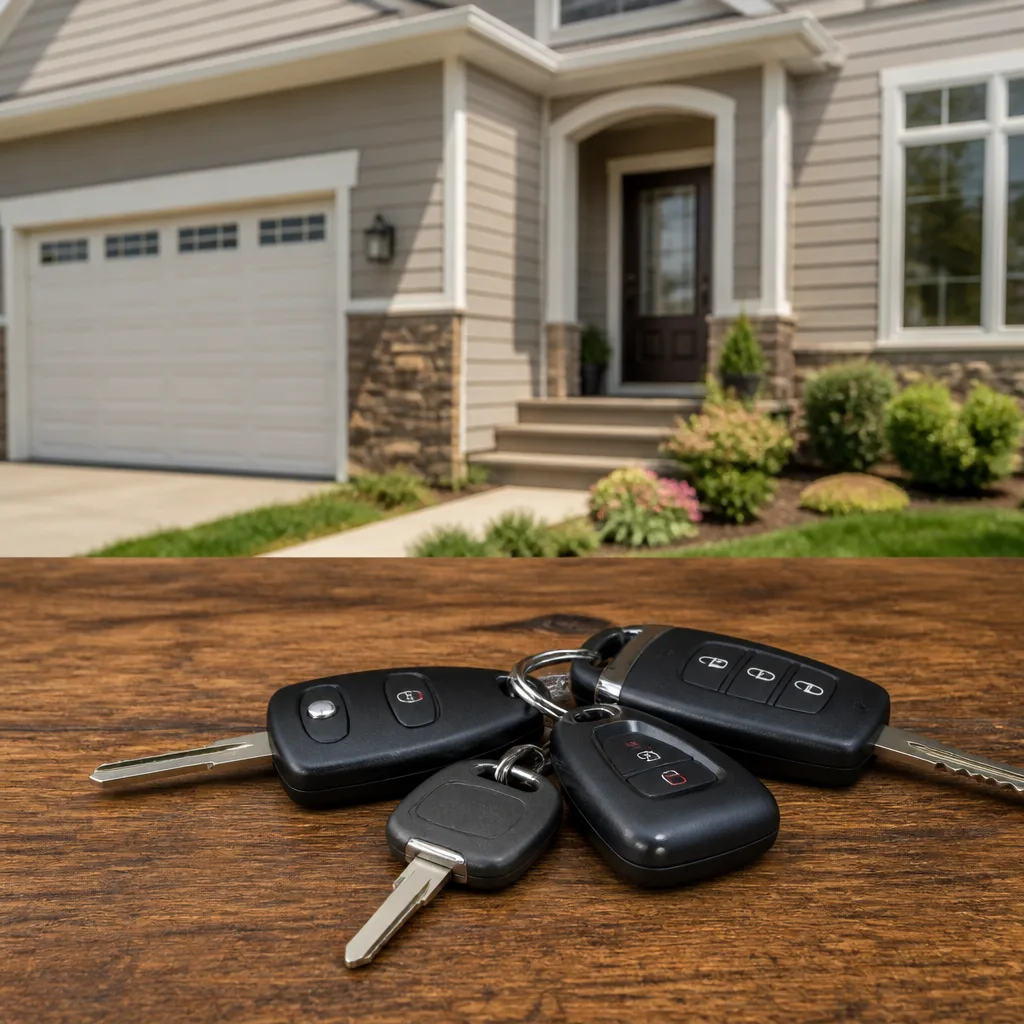
Schlage car key cutting in Phoenix typically runs $85-$165 for a standard transponder or mechanical key, quoted in writing before we dispatch. Most jobs are completed same day at your location, with the key tested in the lock and ignition before we leave. We stock Schlage-compatible blanks and cutting equipment on every truck, and we cut to factory bitting specifications, not approximations.
Most Phoenix owners find us after a key snaps in a summer-heat-brittled head, or after a big-box duplicate fails to turn smoothly. The Schlage automotive line, particularly the SID and SC1 keyways used in older Ford and GM fleet vehicles, suffers from a specific failure pattern in desert climates: the nickel-brass alloy work-hardens faster here, and the shoulder stop wears asymmetrically from grit intrusion. We see this weekly in the parking lots near Sky Harbor and in the driveways of Ahwatukee and Arcadia.
Which Schlage Models This Applies To
Schlage’s automotive presence sits in three distinct tiers, and matching the wrong one wastes a trip.
Mechanical SC1/SC4 keyways: Found in pre-2010 Ford trucks, E-series vans, and some GM fleet vehicles with Schlage aftermarket ignitions. The SC1 uses a .005 inch deeper root cut than standard Ilco blanks; a standard duplicate will bind. We stock OEM Schlage blanks and Ilco 1145 equivalents, matched to the wear pattern of your specific cylinder.
SID series transponder keys: Used in select commercial fleet installations through the mid-2000s. These require both mechanical cutting and Philips Crypto transponder cloning. The gotcha: SID keys have a non-standard shoulder dimension (0.343 inch vs. the common 0.335 inch) that jams in generic machines. Our Framon #2 and HPC Blitz cutters are calibrated weekly for this spec.
Aftermarket Schlage-compatible cylinders: Installed in restoration and custom builds, often with no visible branding. We identify these by the six-pin spacing (0.115 inch center-to-center) and the distinctive Schlage “C” keyway profile.
OEM Schlage blanks run 30-40% higher than quality aftermarket but hold tolerance in high-cycle fleet use. For a personal vehicle driven 12,000 miles yearly in Phoenix, a properly cut Ilco equivalent with brass-nickel composition performs identically. We stock both and will tell you which your application actually needs.
Signs Your Schlage Car Key Cutting Is Failing
- The key requires jiggling or a specific angle to turn. This indicates asymmetric wear on the blade edges or a misaligned pin chamber. In Phoenix, silica dust accelerates this by embedding in the lubricant and acting as grinding compound. The cylinder is scoring itself; continued use will require rekeying or replacement, not just a new key.
- The key head is cracked or flexing. Schlage used ABS plastic in most automotive heads through 2008, which becomes brittle above 140°F interior temperatures. A cracked head transfers torque unevenly, stressing the blade at the shoulder. We replace with nickel-silver heads that don’t embrittle.
- A duplicate from a kiosk or hardware store binds where the original turns freely. Kiosk machines use optical tracing, which copies wear patterns instead of factory bitting. The duplicate is effectively a worn key made fresh. We cut to code from your lock’s pinning or from the factory bitting number stamped on the original blade.
- The transponder light flashes but the engine won’t crank. In SID-series keys, the glass ampule transponder sits 3mm closer to the blade shoulder than in standard Philips applications. A miscut duplicate or a cloned chip in the wrong position fails to energize. We position-test before cutting the mechanical portion.
- The key works in the door but not the ignition, or vice versa. Separate cylinders wear independently. The door cylinder sees less torque and retains factory tolerances longer; the ignition accumulates angular stress. We measure both and cut to the tighter specification, or recommend cylinder replacement if the gap exceeds 0.003 inch.
Replacement Cost & What’s Included
| Service | Typical Range | What’s Included |
|---|---|---|
| Standard mechanical key cut to code | $85-$115 | OEM or Ilco blank, code lookup, cut, test in lock, 365-Day Done Right Promise |
| Transponder key (SID series) cut + cloned | $125-$165 | Mechanical cut, transponder extraction/programming, function test, written warranty |
| Key extraction from broken-off blade | $95-$140 | Extraction tool set, cylinder inspection, new key cut from remains or code, damage assessment |
| Fleet quantity (5+ identical keys) | $65-$85 each | Matched batch cutting, serialized record, Haven Standard documentation |
What drives the range: keyway complexity (SC1 vs. SC4 vs. SID), transponder generation, and whether we cut from an existing key or must decode from the cylinder. Every price is quoted in writing before dispatch, per Haven Standard Clause 1. The price on the phone is the price on the invoice. That’s the whole argument.
Work is backed by our 365-Day Done Right Promise. If the key binds, chips, or fails to function as specified, we recut or replace at no charge. Documentation includes a photo record of the cut key, the bitting code, and the cylinder condition observed during testing.
DIY or Call Us?
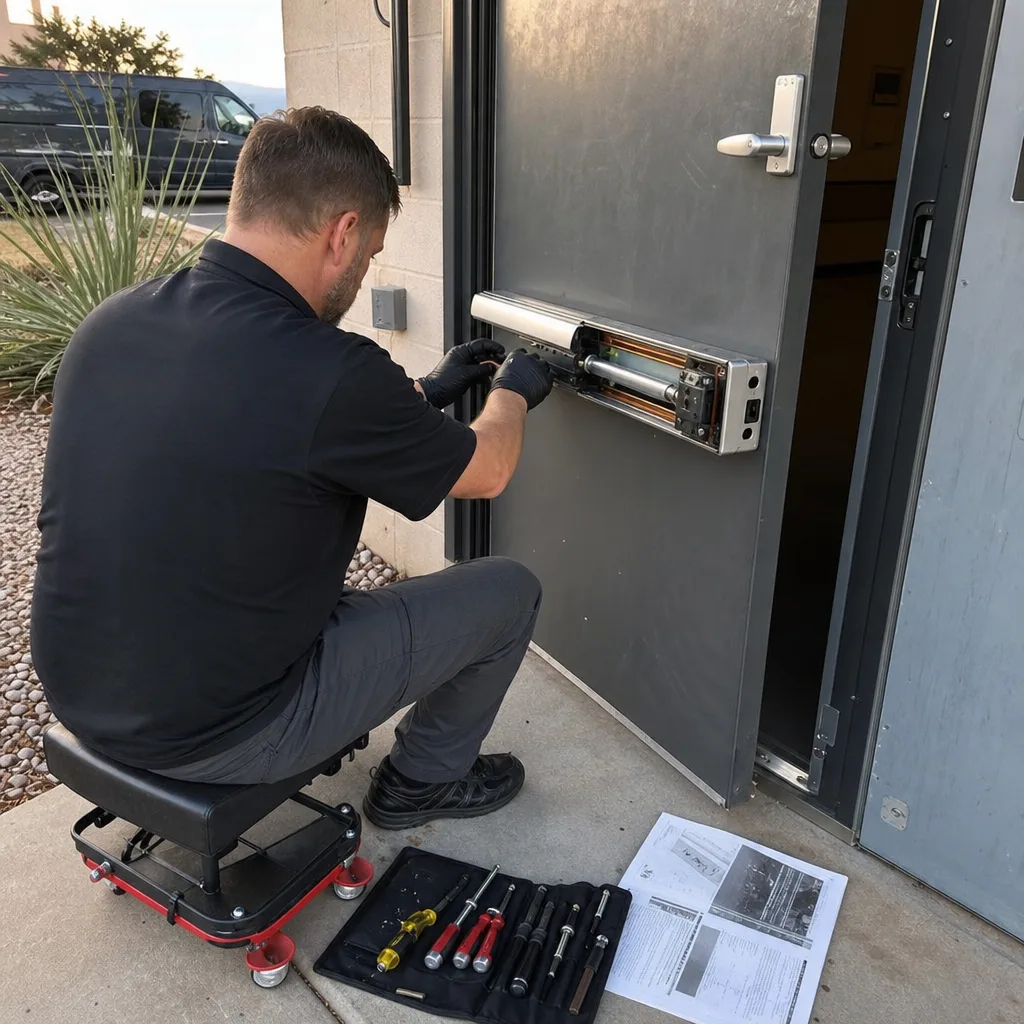
There is no safety hazard in carrying a worn key. The risk is financial: a miscut blank is unusable, and most retailers will not accept returns on cut keys.
What you can check safely: the bitting code stamped on the original blade (usually five numbers, 0-9, on the shoulder or bow). If it’s legible, any locksmith can cut to factory spec. What goes wrong with DIY: kiosk machines cannot read worn keys accurately, cannot handle non-standard shoulders, and cannot program transponders. We’ve replaced dozens of kiosk-cut Schlage keys in Phoenix that cost $8 to produce and $140 to fix.
If your key is your only working copy, the risk of a failed duplication is a lockout. We carry blanks, cutters, and programming equipment on every truck. Call (480) 376-7170 for a written quote before we head out.
FAQs
Mechanical keys last 8-12 years in normal use; transponder keys with original glass ampules average 6-9 years before chip failure. The blade itself outlives the head and the electronics. In Phoenix, dashboard heat cycling (180°F+ summer interiors) accelerates plastic head embrittlement by roughly 30%. We see more broken heads in July and August than all other months combined. Call (480) 376-7170 if your key head is showing stress cracks.
No. A worn blade has lost metal; adding material is not possible, and welding distorts the temper. A cracked head can sometimes be transferred to a new blade if the bitting is intact, but the labor exceeds replacement cost. We assess the original and cut fresh to code. Call (480) 376-7170 for an exact quote.
Mechanical keys: 15-20 minutes including code lookup, cutting, and function test in your lock and ignition. Transponder keys: 35-50 minutes including chip cloning and vehicle-specific programming sequence. We do not leave until the key operates cleanly in all positions. Call (480) 376-7170 to schedule or request same-day dispatch.
Yes. We carry SC1, SC4, and SID-series blanks in brass-nickel and nickel-silver, plus Ilco equivalents for fleet applications. Transponder chips for Philips Crypto and Texas Instruments formats are stocked for same-day programming. If your application uses a discontinued Schlage blank, we source overnight or machine-adapt an equivalent with documented tolerances. Call (480) 376-7170 to confirm availability for your specific model.
Novak Lock & Security Phoenix is an independent service provider, not affiliated with Schlage. We also stock parts for Kwikset and Medeco.
Written by Daniel Novak, Owner, Novak Lock & Security Phoenix at Novak Lock & Security Phoenix, serving Phoenix and nearby areas.